Multaq
What is Multaq (Dronedarone)?
Approved To Treat
Top Global Experts


Related Clinical Trials
Summary: Atrial fibrillation is frequently accompanied by tricuspid regurgitation and may contribute to right atrial and tricuspid annular remodeling, leading to progression of tricuspid regurgitation and adverse clinical outcomes. However, whether early rhythm control improves prognosis in patients with atrial fibrillation and tricuspid regurgitation remains unclear. This study will compare early rhythm c...
Summary: This study will determine whether early, comprehensive, rhythm control therapy prevents adverse cardiovascular outcome in patients with acute ischemic stroke and atrial fibrillation compared to usual care.
Summary: The goal of this study to find out the efficacy of early rhythm therapy in patients with subclinical atrial fibrillation detected by Cardiac Electronic Implantable Devices. Early rhythm therapy includes antiarrhythmic drug, cardioversion, and catheter ablation. The general control group receives general management without the above atrial fibrillation rhythm control treatment. Researchers will com...
Related Latest Advances
Brand Information
- Permanent atrial fibrillation (patients in whom normal sinus rhythm will not or cannot be restored)
- Symptomatic heart failure with recent decompensation requiring hospitalization or NYHA Class IV symptoms
- Second or third-degree atrioventricular (AV) block, or sick sinus syndrome (except when used in conjunction with a functioning pacemaker)
- Bradycardia <50 bpm
- Concomitant use of strong CYP3A inhibitors, such as ketoconazole, itraconazole, voriconazole, cyclosporine, telithromycin, clarithromycin, nefazodone, and ritonavir
- Concomitant use of erythromycin
- Concomitant use of drugs or herbal products that prolong the QT interval and might increase the risk of torsade de pointes, such as phenothiazine antipsychotics, tricyclic antidepressants, certain oral macrolide antibiotics, and Class I and III antiarrhythmics
- Liver or lung toxicity related to the previous use of amiodarone
- QTc interval >500 ms or PR interval >280 ms
- Severe hepatic impairment
- Hypersensitivity to the active substance or to any of the excipients
- New or worsening heart failure
- Liver Injury
- Pulmonary toxicity
- Hypokalemia and hypomagnesemia with potassium-depleting diuretics
- QT prolongation
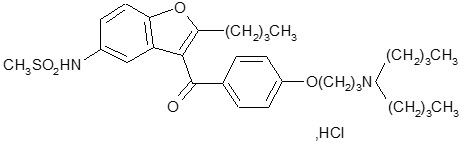
- Core of the tablets: Colloidal silicon dioxide, crospovidone, hypromellose, lactose monohydrate, magnesium stearate, poloxamer 407, starch.
- Coating/polishing of the tablets: Carnauba wax, hypromellose, polyethylene glycol 6000, titanium dioxide.
- Bottles of approximately 1260 film-coated tablets, NDC 55154-8104-2
