Gastrectomy ProcedureDescription, Latest Information and Doctors
Learn About Gastrectomy
Gastrectomy is surgery to remove part or all of the stomach.
- If only part of the stomach is removed, it is called partial gastrectomy
- If the whole stomach is removed, it is called total gastrectomy
Surgery - stomach removal; Gastrectomy - total; Gastrectomy - partial; Stomach cancer - gastrectomy
The surgery is done while you are under general anesthesia (asleep and pain free). The surgeon makes a cut in the abdomen and removes all or part of the stomach, depending on the reason for the procedure.
Depending on what part of the stomach was removed, the intestine may need to be reconnected to the remaining stomach (partial gastrectomy) or to the esophagus (total gastrectomy).
Some surgeons can also do this surgery using a laparoscope. A laparoscope has a tiny camera that is inserted into your belly through a small cut. Video from the camera will appear on a monitor in the operating room. The surgeon views the monitor to do the surgery. When done this way, the surgery, which is called laparoscopy, is done with a few small surgical cuts. The advantages of this surgery are a faster recovery, less pain, and only a few small cuts.
This surgery is used to treat stomach problems such as:
- Bleeding
- Inflammation
- Cancer
- Polyps (growth on the lining of the stomach)
Risks for anesthesia and surgery in general include:
- Reactions to medicines or breathing problems
- Bleeding, blood clots, heart problems. or infection
Risks for this surgery include:
- Leaking from the connection to the intestine which can cause infection or abscess
- Narrowing of the connection to the intestine, causing blockage
- Nausea or vomiting
- Dumping syndrome, (when food moves too rapidly from the stomach to the duodenum)
- Persistent diarrhea
If you are a smoker, you should stop smoking several weeks before surgery and not start smoking again after surgery. Smoking slows recovery and increases the risk of problems. Tell your surgeon or health care provider if you need help quitting.
Tell your surgeon or nurse if:
- You are or could be pregnant
- You are taking any medicines, including medicines, supplements, or herbs you bought without a prescription
During the week before your surgery:
- You may be asked to temporarily stop taking medicines that keep your blood from clotting. These medicines are called blood thinners. This includes over-the-counter medicines and supplements such as aspirin, ibuprofen (Advil, Motrin), naproxen (Aleve, Naprosyn), and vitamin E. Many prescription medicines are also blood thinners.
- Ask your surgeon which medicines you should still take on the day of surgery.
On the day of surgery:
- Follow instructions about when to stop eating and drinking.
- Take the medicines your surgeon told you to take with a small sip of water.
- Arrive at the hospital on time.
You may stay in hospital for 6 to10 days.
After surgery, there may be a tube in your nose which will help keep your stomach empty. It is removed as soon as your bowels are working well.
Most people have pain from the surgery. You may receive a single medicine or a combination of medicines to control your pain. Tell your surgeon when you are having pain and if the medicines you are receiving control your pain.
How well you do after surgery depends on the reason for the surgery and your condition.
Ask your surgeon if there are any activities you shouldn't do after you go home. It may take several weeks for you to recover fully. While you are taking narcotic pain medicines, you should not drive.

Cleveland Clinic Main Campus
Matthew Kroh is a General Surgeon practicing medicine in Cleveland, Ohio. He has been practicing medicine for over 30 years. Dr. Kroh is rated as an Elite provider by MediFind in Gastrectomy. He is also highly rated in 18 other conditions, according to our data. His clinical expertise encompasses Gastroparesis, Hiatal Hernia, Obesity, Gastrectomy, and Gastric Bypass. Dr. Kroh is board certified in American Board Of Surgery, 2023.

Cleveland Clinic Main Campus
Valentin Mocanu is a General Surgeon practicing medicine in Cleveland, Ohio. He has been practicing medicine for over 15 years. Dr. Mocanu is rated as an Elite provider by MediFind in Gastrectomy. He is also highly rated in 6 other conditions, according to our data. His clinical expertise encompasses Obesity, Gastroesophageal Reflux Disease (GERD), Anorectal Abscess, Gastric Bypass, and Gastrectomy. Dr. Mocanu is board certified in Royal College Of Physicians And Surgeons Of Canada, 2013.
Brigham And Women's Crohn's And Colitis Center
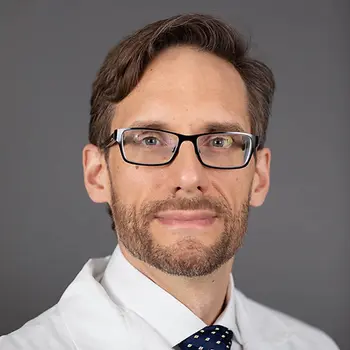
Dr. Christopher C. Thompson is the Director of Endoscopy at Brigham and Women’s Hospital (BWH), Co-director of the Center for Weight Management and Wellness, and Professor of Medicine at Harvard Medical School. He is also the Advanced Endoscopy Fellowship Program Director and clinical faculty at Boston Children’s Hospital and the Dana-Farber Cancer Institute. Dr. Thompson’s clinical interests include endoscopic surgery applied to foregut conditions, with a focus on endoscopic treatment of obesity, GERD, Zenker’s diverticula, achalasia, gastroparesis, postsurgical complications, and pancreatobiliary disease. He spends the majority of his time performing these advanced endoscopic procedures and also cares for these patients in the ambulatory setting. The remainder of his time is devoted to research in endoscopic surgery, with a focus on device development, clinical outcomes, and endoscopic education. His research has resulted in numerous patents, development of new endoscopic procedures, and over 300 publications. He was awarded the Brigham and Women’s Physician Organization Clinical Innovation Award in 2007 for developing and performing the first endoscopic suturing procedure to treat obesity. He also invented anastomosis technology, which has been shown to treat type 2 diabetes effectively in early clinical trials. He was responsible for much of the early work in Bariatric Endoscopy, having been called the founding father of the field, and edited the first textbook and video atlas on the subject. Some of his other important clinical innovations include the development of new endoscopic techniques for treating pancreatic necrosis, gastric outlet obstruction, sleeve gastrectomy stenosis, pancreaticojejunal anastomotic strictures, and postsurgical complications. He also developed an endoscopic part-task simulator used by many fellowship programs (the TEST box).These accomplishments have led to a broad clinical referral base, and to national and international invitations for lectureships and live case demonstrations, including the American College of Gastroenterology (ACG) Blackwell Lectureship, ACG American Journal of Gastroenterology Lecture, American Gastroenterological Association (AGA) Presidential Plenary Lecture, American Society for Gastrointestinal Endoscopy (ASGE) J Edward Berk Presidential Plenary Lecture, ACG Edgar Achkar Visiting Professorship, all post-graduate education courses for the major US gastroenterology and surgical societies, and numerous respected courses throughout Europe, Asia, and South America. He has also mentored more than 20 fellows, many of whom have gone on to thrive in prestigious academic institutions, and he established the first Fellowship in Bariatric Endoscopy. Dr. Thompson is rated as an Elite provider by MediFind in Gastrectomy. He is also highly rated in 38 other conditions, according to our data. His clinical expertise encompasses Obesity, Esophageal Varices, Gastrointestinal Fistula, Endoscopy, and Gastric Bypass.
Summary: The iGreenGO Study aims to investigate whether the intraoperative application of NIR/ICG technology is associated with a change in the surgical conduct (CSC) during curative-intent gastrectomy with D2 lymphadenectomy in a cohort of Western patients affected by AGC. The preoperative clinical variables potentially associated with CSC will be also investigated
Summary: The Bialystok Bariatric Surgery Study (BBSS) is a prospective observational cohort study of patients undergoing bariatric surgery at the First Clinical Department of General and Endocrine Surgery at the Medical University of Bialystok. The BBSS consists of a battery of baseline tests established one month prior to the surgery and repeated at one, three, six, twelve and twenty four-month follow-up ...
Published Date: September 30, 2024
Published By: Jonas DeMuro, MD, Diplomate of the American Board of Surgery with added Qualifications in Surgical Critical Care, Assistant Professor of Surgery, Renaissance School of Medicine, Stony Brook, NY. Review provided by VeriMed Healthcare Network. Also reviewed by David C. Dugdale, MD, Medical Director, Brenda Conaway, Editorial Director, and the A.D.A.M. Editorial team.
Antiporda M, Reavis KM. Gastrectomy. In: Delaney CP, ed. Netter's Surgical Anatomy and Approaches. 2nd ed. Philadelphia, PA: Elsevier; 2021:chap 8.
Mahvi DA, Mahvi DM. Stomach. In: Townsend CM Jr, Beauchamp RD, Evers BM, Mattox KL, eds. Sabiston Textbook of Surgery. 21st ed. St Louis, MO: Elsevier; 2022:chap 49.