Colonoscopy ProcedureDescription, Latest Information and Doctors
Learn About Colonoscopy
Colonoscopy is done most often in a procedure room either at a surgical center or in the outpatient department of a hospital or medical center. This procedure is most often done by a specially trained doctor called a gastroenterologist.
- You will be asked to change out of your street clothes and wear a hospital gown for the procedure.
- You will likely be given medicine into a vein (IV) to help you relax. You should not feel any pain. You may be awake during the test and may even be able to speak. You will probably not remember anything.
- You will lie on your left side with your knees drawn up toward your chest.
- The scope is gently inserted through the anus. It is carefully moved into the lowest part of the large intestine. The scope is slowly advanced as far as the lowest part of the small intestine.
- Air or carbon dioxide is inserted through the scope to provide a better view. Suction may be used to remove fluid or stool.
- The doctor gets a better view as the scope is moved back out. So, a more careful exam is done while the scope is being pulled back.
- Tissue samples (biopsy) or polyps may be removed using tiny tools inserted through the scope. Photos may be taken using the camera at the end of the scope. If needed, procedures, such as injection, bleeding control, or other techniques, are also done.
Your bowel needs to be completely empty and clean for the exam. A problem in your large intestine that needs to be treated may be missed if your intestines are not cleaned out.
Your provider will give you the steps for cleansing your bowel. This is called bowel preparation. Steps may include:
- Using enemas
- Eating clear liquids only for the day before the test
- Taking laxatives
You need to drink plenty of clear liquids for 1 to 3 days before the test. Examples of clear liquids are:
- Clear coffee or tea
- Fat-free bouillon or broth
- Gelatin
- Sports drinks without added color
- Strained fruit juices
- Water
You may be told to stop taking aspirin, ibuprofen, naproxen, or other blood-thinning medicines for several days before the test. Do not stop without talking to your provider, especially if you've had a heart problem. Many times, aspirin or blood thinners may be continued.
You will need to stop taking iron pills or liquids a few days before the test, unless your provider tells you it is OK to continue. Iron can make your stool dark black. This makes it harder for the doctor to view inside your bowel.
The medicines given for the test will make you sleepy so that you may not feel any discomfort or have any memory of the test.
You may feel pressure as the scope moves inside. You may feel brief cramping and gas pains as air is inserted or the scope advances. Passing gas is necessary and should be expected.
After the exam, you may have mild abdominal cramping and pass a lot of gas. You may also feel bloated and sick to your stomach. These feelings will soon go away.
You should be able to go home about one hour after the test. You must plan to have someone take you home after the test because you will be woozy and unable to drive. Your providers will not let you leave until someone arrives to help you.
When you are home, follow instructions on recovering from the procedure. These may include:
- Drink plenty of liquids. Eat a healthy meal to restore your energy.
- You should be able to return to your regular activities the next day.
- Avoid driving, operating machinery, drinking alcohol, and making important decisions for at least 24 hours after the test.
Colonoscopy may be done for the following reasons:
- Abdominal pain, changes in bowel movements, or weight loss
- Abnormal changes (polyps) found on sigmoidoscopy or x-ray tests (virtual colonoscopy, CT scan, or barium enema)
- Anemia due to low iron (usually when no other cause has been found)
- Blood in the stool, or black, tarry stools
- Follow-up of a past finding, such as polyps or colon cancer
- Inflammatory bowel disease (ulcerative colitis and Crohn disease)
- Screening for colorectal cancer
Normal findings are healthy intestinal tissues.
Abnormal test results may mean any of the following:
- Abnormal pouches on the lining of the intestines, called diverticulosis
- Areas of bleeding
- Cancer in the colon or rectum
- Colitis (a swollen and inflamed intestine) due to Crohn disease, ulcerative colitis, infection, or lack of blood flow
- Small growths called polyps on the lining of your colon (which can be removed through the colonoscope during the exam)
A colonoscopy is an exam that views the inside of the colon (large intestine) and rectum, using a tool called a colonoscope.
The colonoscope has a small camera attached to a flexible tube that can reach the entire length of the colon.
Colon cancer - colonoscopy; Colorectal cancer - colonoscopy; Colonoscopy - screening; Colon polyps - colonoscopy; Ulcerative colitis - colonoscopy; Crohn disease - colonoscopy; Diverticulitis - colonoscopy; Diarrhea - colonoscopy; Anemia - colonoscopy; Blood in stool - colonoscopy
Risks of colonoscopy may include any of the following:
- Heavy or ongoing bleeding from biopsy or removal of polyps
- Hole or tear in the wall of the colon that requires surgery to repair
- Infection needing antibiotic therapy (very rare)
- Reaction to the medicine you are given to relax, causing breathing problems or low blood pressure

UChicago Medicine Duchossois Center For Advanced Medicine - Hyde Park
Prateek Sharma is a Cardiologist and an Interventional Cardiologist practicing medicine in Chicago, Illinois. Dr. Sharma is rated as an Elite provider by MediFind in Colonoscopy. He is also highly rated in 4 other conditions, according to our data. His clinical expertise encompasses COVID-19, Gastroesophageal Junction Cancer, Familial Hypertriglyceridemia, Endoscopy, and Colonoscopy. Dr. Sharma is board certified in Cardiovascular Disease Internal Medicine.
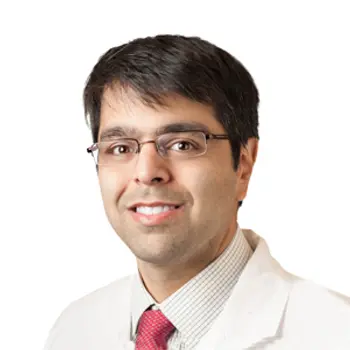
Rajesh Keswani is a Gastroenterologist practicing medicine in Chicago, Illinois. He has been practicing medicine for over 25 years. Dr. Keswani is rated as an Elite provider by MediFind in Colonoscopy. He is also highly rated in 27 other conditions, according to our data. His clinical expertise encompasses Bile Duct Obstruction, Cholestasis, Acute Pancreatitis, Colonoscopy, and Endoscopy. Dr. Keswani is board certified in American Board Of Internal Medicine - Gastroenterology (Certified).

BIDMC Endoscopy - West Campus
Joseph Feuerstein is an Internal Medicine provider practicing medicine in Boston, Massachusetts. Dr. Feuerstein is rated as an Elite provider by MediFind in Colonoscopy. He is also highly rated in 23 other conditions, according to our data. His clinical expertise encompasses Gastrointestinal Bleeding, Ulcerative Colitis, Viral Gastroenteritis, Endoscopy, and Colonoscopy. Dr. Feuerstein is board certified in American Board Of Internal Medicine.
Summary: Using prospective real-world data, this study aims to determine whether the lateral decubitus position reduces the incidence of post-procedure hypoxemia in patients undergoing painless gastroscopy/colonoscopy, thereby providing a simple, non-invasive, and low-cost optimization strategy for clinical practice.
Summary: The study participant is being asked to take part in this clinical trial, a type of research study, because the participant has Gastrointestinal (GI) symptoms following a Hematopoietic Cell Transplant (HCT). Primary Objective * To determine the safety and feasibility of FMT for treating a GvHD of the gut following HCT. * To determine the safety and feasibility of FMT for treating HCT induced gut d...
Published Date: January 30, 2025
Published By: Jenifer K. Lehrer, MD, Gastroenterologist, Philadelphia, PA. Review provided by VeriMed Healthcare Network. Also reviewed by David C. Dugdale, MD, Medical Director, Brenda Conaway, Editorial Director, and the A.D.A.M. Editorial team. Editorial update 08/12/2025.
Garber JJ, Chung DC, eds. Colonic polyps and polyposis syndromes. In: Feldman M, Friedman LS, Brandt LJ, eds. Sleisenger and Fordtran's Gastrointestinal and Liver Disease: Pathophysiology/Diagnosis/Management. 11th ed. Philadelphia, PA: Elsevier; 2021:chap 126.
Lawler M, Johnston B, Van Schaeybroeck S, et al. Colorectal cancer. In: Niederhuber JE, Armitage JO, Kastan MB, Doroshow JH, Tepper JE, eds. Abeloff's Clinical Oncology. 6th ed. Philadelphia, PA: Elsevier; 2020:chap 74.
National Cancer Institute website. Colorectal cancer prevention (PDQ) - health professional version. www.cancer.gov/types/colorectal/hp/colorectal-prevention-pdq. Updated April 11, 2025. Accessed August 12, 2025.
National Comprehensive Cancer Network website. NCCN clinical practice guidelines in oncology (NCCN guidelines): colorectal cancer screening. Version 2.2025 - June 24, 2025. www.nccn.org/professionals/physician_gls/pdf/colorectal_screening.pdf. Accessed August 12, 2025.
Patel SG, May FP, Anderson JC, et al. Updates on age to start and stop colorectal cancer screening: recommendations from the U.S. Multi-Society Task Force on Colorectal Cancer. Gastroenterology. 2022;162(1):285-299. PMID: 34794816 pubmed.ncbi.nlm.nih.gov/34794816/.
Shaukat A, Kahi CJ, Burke CA, Rabeneck L, Sauer BG, Rex DK. ACG clinical guidelines: colorectal cancer screening 2021. Am J Gastroenterol. 2021;116(3):458-479. PMID: 33657038 pubmed.ncbi.nlm.nih.gov/33657038/.
US Preventive Services Task Force website. Final recommendation statement. Colorectal cancer: screening. www.uspreventiveservicestaskforce.org/uspstf/recommendation/colorectal-cancer-screening. Published May 18, 2021. Accessed April 4, 2025.