
Overview
Laryngologist Simon Best specializes in voice and airway disorders, including the comprehensive care of professional voice-users and performers. He treats patients diagnosed with recurrent respiratory papillomatosis (RRP), vocal cord paralysis, laryngeal cancer, precancerous vocal cord dysplasia, benign laryngeal lesions (polyps, cysts, nodules), and laryngeal and tracheal stenosis. He has expertise in the operative management of vocal cord disorders, including Blue Light laser surgery and office-based management of vocal cord papilloma, dysplasia and vocal cord paralysis. Dr. Best earned a medical degree from the Yale School of Medicine and completed residency training in Otolaryngology–Head and Neck Surgery at the Johns Hopkins University School of Medicine. He undertook fellowship training in laryngology at Massachusetts General Hospital. Dr. Best has a particular clinical and research interest in recurrent respiratory papillomatosis and sees patients from across the country for specialized care for this disorder. He offers operative and office-based laser for papilloma, utilizing the Blue Light laser, which allows for precise excision of papilloma while preserving underlying vocal function. Dr. Best is also a pioneer in the adjuvant use of bevacizumab for RRP, helping many patients break the cycle of repeated surgeries. The Best Laboratory studies RRP and the development of novel immunotherapies to target the underlying viral infection. This research is conducted in collaboration with the head and neck cancer and cervical cancer research groups at Johns Hopkins, which also study human papillomavirus-related diseases. In addition, Johns Hopkins is a site for ongoing clinical trials in DNA immunotherapy, the goal of which is to eliminate the causative viral infection that leads to RRP.
Dr. Best is rated as an Experienced provider by MediFind in the treatment of Vertigo. His top areas of expertise are Laryngeal Nerve Damage, Recurrent Respiratory Papillomatosis, Spasmodic Dysphonia, Laryngectomy, and Gastrostomy.
Insurance
Accepted insurance can change. Please verify directly with the provider.
Accepted insurance plans:
- EPO
- HMO
- POS
- PPO
- EPO
- HMO
- POS
- PPO
- EPO
- HMO
- POS
- PPO
- HMO
- POS
- PPO
- EPO
- HMO
- PPO
- INSURANCE PLAN
- MEDICARE PDP
- PPO
- HMO
- POS
- PPO
- EPO
- HMO
- POS
- PPO
- EPO
- HMO
- PPO
- EPO
- POS
- HMO
- INDEMNITY
- POS
- PPO
- HMO
- MANAGED MEDICAID PLAN
- MEDICARE MAPD
- MEDICARE-MEDICAID PLAN
- OTHER MANAGED MEDICAID
- HMO
- INSURANCE PLAN
- MANAGED MEDICAID PLAN
- PPO
- OTHER MEDICAID
- STATE MEDICAID
- INSURANCE PLAN
- MANAGED MEDICAID PLAN
- MEDICARE MAPD
- MEDICARE PDP
- MEDICARE SNP
- MEDICARE-MEDICAID PLAN
- OTHER MEDICARE PART D
- EPO
- HMO
- POS
- PPO
- EPO
- HMO
- INSURANCE PLAN
- MANAGED MEDICAID PLAN
- MEDICARE MAPD
- MEDICARE PDP
- MEDICARE SNP
- MEDICARE-MEDICAID PLAN
- OTHER MEDICARE
- OTHER MEDICARE PART D
Locations
601 North Caroline Street, Floor 6, Floor 6, Baltimore, MD 21287
6420 Rockledge Drive, Suite 4920, Bethesda, MD 20817
10803 Falls Road, Pavilion III STE 2500, Lutherville, MD 21093

Johns Hopkins Bayview Medical Center
David Newman-Toker, M.D., Ph.D., is an internationally recognized leader in neuro-otology, acute stroke diagnosis, and diagnostic errors research. He completed his undergraduate studies at Yale University, his medical degree at University of Pennsylvania, his residency training and neuro-ophthalmology fellowship at Harvard University, his neuro-otology fellowship at Johns Hopkins University School of Medicine, and his doctoral degree in clinical research methods at the Johns Hopkins Bloomberg School of Public Health. He has served as a full-time faculty member at the Johns Hopkins University School of Medicine since 2002. He is the David Robinson Professor of Vestibular Neurology and also holds appointments in Otolaryngology, Ophthalmology, Emergency Medicine, Acute Care Nursing, Health Sciences Informatics, Epidemiology, and Health Policy & Management at Johns Hopkins. Dr. Newman-Toker is a bedside-to-populations translational researcher, with a focus on eliminating diagnostic errors and achieving diagnostic excellence. He is a leader in the national and international movements to eliminate patient harms from diagnostic error. Dr. Newman-Toker’s clinical focus is on diagnosis of acute disorders affecting the brainstem and cranial nerves, particularly stroke. He is recognized for his research in novel eye-movement-based bedside methods for diagnosing stroke in patients with acute dizziness and vertigo in the emergency department and, in 2024, won the international Bárány Society’s Hallpike-Nylén Prize for clinical research achievement. Dr. Newman-Toker serves as director of the Division of Neuro-Visual & Vestibular Disorders in the Department of Neurology. He also directs the Armstrong Institute Center for Diagnostic Excellence, whose mission is to catalyze efforts to improve diagnostic performance, develop the science of diagnostic safety, and enhance diagnostic research. He has been the principal investigator on numerous National Institutes of Health, Agency for Healthcare Research and Quality (AHRQ), and foundation grants. He has published over 165 journal articles and given more than 300 invited lectures. He has served as an expert consultant on diagnostic safety and quality to AHRQ, the National Quality Forum, and the National Academy of Medicine. He has testified before Congress on the use of artificial intelligence for medical diagnosis. He was president of the Society to Improve Diagnosis in Medicine from 2018-2020. Dr. Newman is rated as a Distinguished provider by MediFind in the treatment of Vertigo. His top areas of expertise are Vertigo, Benign Paroxysmal Positional Vertigo, Stroke, and Brown Syndrome.

Johns Hopkins Outpatient Center
Neurotologist John Carey specializes in the health and diseases of the inner ear that affect both balance and hearing mechanisms. He is a national expert in superior canal dehiscence syndrome, Menière’s disease, vestibular migraine, acoustic neuromas and other causes of vertigo, and serves as chief of the Division of Otology, Neurotology and Skull Base Surgery in the Department of Otolaryngology–Head and Neck Surgery at the Johns Hopkins University School of Medicine. Dr. Carey earned a medical degree from Washington University School of Medicine and completed two years of training in general surgery at Virginia Mason Medical Center. This was followed by residency training in otolaryngology–head and neck surgery at University of Washington Medical Center and fellowship training in neurotology at the Johns Hopkins University School of Medicine. His research interests include superior canal dehiscence syndrome, Menière’s disease, vestibular implants, and the mechanisms of vestibular migraine. He has a particular interest in superior canal dehiscence syndrome, and, with Lloyd Minor, department director from 2003 to 2009, he helped develop the operation used to repair the superior canal. Dr. Carey has been funded by the National Institute on Deafness and Other Communication Disorders, part of the National Institutes of Health. He has authored or co-authored over 150 peer-reviewed publications, 10 book chapters, and 11 reviews. Dr. Carey is rated as an Elite provider by MediFind in the treatment of Vertigo. His top areas of expertise are Meniere Disease, Vertigo, Acoustic Neuroma, Mastoidectomy, and Endoscopy.
ENT & Allergy Of Delaware
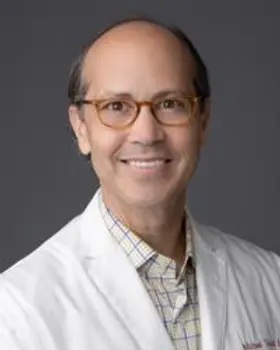
Michael Teixido is an Otolaryngologist in Newark, Delaware. Dr. Teixido has been practicing medicine for over 45 years and is rated as a Distinguished provider by MediFind in the treatment of Vertigo. His top areas of expertise are Benign Paroxysmal Positional Vertigo, Vertigo, Infant Hearing Loss, DFNB1, and Myringotomy.
Areas of Expertise
MediFind evaluates expertise by pulling from factors such as number of articles a doctor has published in medical journals, participation in clinical trials, speaking at industry conferences, prescribing and referral patterns, and strength of connections with other experts in their field.
Learn more about MediFind’s expert tiers
- Distinguished
- Laryngeal CancerDr. Best isDistinguished. Learn about Laryngeal Cancer.
- Laryngeal Nerve DamageDr. Best isDistinguished. Learn about Laryngeal Nerve Damage.
- LaryngitisDr. Best isDistinguished. Learn about Laryngitis.
- Recurrent Respiratory PapillomatosisDr. Best isDistinguished. Learn about Recurrent Respiratory Papillomatosis.
- Spasmodic DysphoniaDr. Best isDistinguished. Learn about Spasmodic Dysphonia.
- Throat CancerDr. Best isDistinguished. Learn about Throat Cancer.
- Advanced
- Acquired TracheomalaciaDr. Best isAdvanced. Learn about Acquired Tracheomalacia.
- LaryngectomyDr. Best isAdvanced. Learn about Laryngectomy.
- Painful SwallowingDr. Best isAdvanced. Learn about Painful Swallowing.
- Palatopharyngeal IncompetenceDr. Best isAdvanced. Learn about Palatopharyngeal Incompetence.
- PerichondritisDr. Best isAdvanced. Learn about Perichondritis.
- Swallowing DifficultyDr. Best isAdvanced. Learn about Swallowing Difficulty.
- Experienced
- Autonomic NeuropathyDr. Best isExperienced. Learn about Autonomic Neuropathy.
- Chronic CoughDr. Best isExperienced. Learn about Chronic Cough.
- DFNB1Dr. Best isExperienced. Learn about DFNB1.
- Dry MouthDr. Best isExperienced. Learn about Dry Mouth.
- DysarthriaDr. Best isExperienced. Learn about Dysarthria.
- Gastroesophageal Reflux Disease (GERD)