The 20 Best Dubowitz Syndrome Doctors Near Me in Baltimore, MD
Find the Top Dubowitz Syndrome Experts and Specialists
Greater Baltimore Medical Center
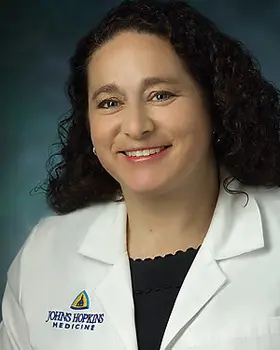
Dr. Stacy Fisher is a cardiologist in Baltimore, Maryland specializing in the care of adult congenital heart disease, pregnancy-related heart disease and congenital heart pulmonary hypertension. She is Associate Director of the Adult Congenital Heart Disease (ACHD) Center at the Johns Hopkins Heart and Vascular Institute and Director of the ACHD Training Program. She is also an Associate Professor of Medicine at the Johns Hopkins University School of Medicine. Her research focus is congenital heart disease in adults including pulmonary hypertension, inherited heart disease and 3D printing translational medicine. She is interested in imaging and using 3D modeling to advance cardiac care and education. Her education includes a Bachelor of Science degree in Microbiology from Miami University in Oxford, Ohio, and a Doctor of Medicine Degree from the University of Maryland School of Medicine in Baltimore, Maryland. She completed an internship and residency in Internal Medicine at Duke University in Durham, North Carolina. Her fellowship in cardiology was at the University of Rochester, Strong Memorial Hospital in Rochester, New York, including serving as the Chief Cardiology Fellow. She was then an Adult Congenital Heart Fellow at the University of Rochester, Strong Memorial Hospital. After completing her fellowship in 2001, she joined a Baltimore cardiology practice and was named Director of Women’s Cardiovascular Services and the Co-Director of the Cardiac Critical Care Unit at Sinai Hospital in Baltimore, positions which she held until 2011. She then joined University of Maryland School of Medicine as Director of Women’s and Complex Heart diseases where she started and directed the Adult Congenital Heart Program and practiced through 2022 when she joined Johns Hopkins. She was recently the President of the American Heart Association’s Greater Maryland Region. Videos Dr. Stacy Fisher. Dr. Fisher is rated as an Advanced provider by MediFind in the treatment of Dubowitz Syndrome. She is also highly rated in 38 other conditions, according to our data. Her clinical expertise encompasses Familial Ventricular Tachycardia, Arrhythmias, Ventricular Tachycardia, Aortic Valve Replacement, and Transcatheter Aortic Valve Replacement (TAVR). Dr. Fisher is board certified in American Board Of Internal Medicine.
Rubenstein Child Health Building
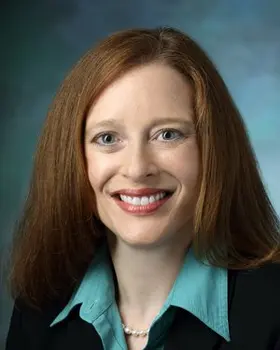
Dr. Jill A. Fahrner is an assistant professor in the Departments of Genetic Medicine and Pediatrics at the Johns Hopkins University School of Medicine. Her area of clinical expertise is medical genetics. Dr. Fahrner earned her Ph.D. from Johns Hopkins University and her M.D. from the University of North Carolina. She completed pediatrics residency training at Duke University Medical Center. She joined the McKusick-Nathans Institute of Genetic Medicine as a genetic medicine resident in 2009 and completed her training in 2012. She stayed on as chief resident from 2012-2013 and then joined the faculty as an assistant professor in the Department of Pediatrics within the McKusick-Nathans Institute of Genetic Medicine in 2013. Her current primary appointment is Assistant Professor in the Department of Genetic Medicine, where she is Director of the multidisciplinary Epigenetics and Chromatin Clinic. She is a physician-scientist with a long-standing interest in epigenetic mechanisms of disease. Her clinical focus is on caring for individuals with epigenetic and chromatin disorders, specifically Mendelian disorders of the epigenetic machinery, or chromatin modifying disorders. She has seen hundreds of individuals with congenital disorders involving disrupted epigenetics, most of which exhibit neurodevelopmental disabilities and abnormal growth. Her laboratory research is focused on understanding disease mechanisms and developing therapies for select Mendelian disorders of the epigenetic machinery. She is a member of the American Society of Human Genetics (ASHG), having won an ASHG Reviewer’s Choice Abstract Award for her work on growth retardation in Kabuki syndrome 1. She has received a Johns Hopkins School of Medicine Clinician Scientist Award, a Johns Hopkins School of Medicine Musculoskeletal Pilot and Feasibility Award, a William and Ella Owens Medical Research Foundation Award, the Margaret Ellen Nielsen Fellowship Award, and the Alice and YT Chen Travel Award while at Johns Hopkins. She is the recipient of a prestigious Hartwell Foundation Individual Biomedical Research Award and also has ongoing research funding from the National Institutes of Health. Dr. Fahrner is rated as an Advanced provider by MediFind in the treatment of Dubowitz Syndrome. She is also highly rated in 10 other conditions, according to our data. Her clinical expertise encompasses Weaver Syndrome, Sotos Syndrome, Kabuki Syndrome, Marshall-Smith Syndrome, and Orchiectomy. Dr. Fahrner is board certified in American Board Of Medical Genetics And Genomics.

Rubenstein Child Health Building
Dr. Ada Hamosh is the Dr. Frank V. Sutland Professor of Pediatric Genetics in the Departments of Genetic Medicine and Pediatrics. Since 2002, she has served as clinical director of the McKusick-Nathans Institute of Genetic Medicine, now Department of Genetic Medicine and scientific director of the Online Mendelian Inheritance in Man® (OMIM), a catalog of more than 16,800 human genes and genetic disorders created by Dr. Victor A. McKusick. Her research centers the molecular basis of Mendelian disorders, the integration of genetics into clinical practice and the diagnosis and management of inborn errors of metabolism. Dr. Hamosh earned a bachelor’s degree in biology from Wesleyan University, a medical degree from Georgetown University School of Medicine and a master’s of public health from Johns Hopkins University School of Public Health. She later completed a fellowship in medical and biochemical genetics from the Johns Hopkins School of Medicine, before joining the Johns Hopkins faculty in 1992. Dr. Hamosh began her genetics career focusing on cystic fibrosis, serving as coordinator of the International Cystic Fibrosis Genotype-Phenotype Consortium. She served as chair of the Maryland State Advisory Council for Hereditary & Congenital Disorders from 2001-2009, during which time she also served on the executive committee of the Genetic Counseling Training Program, run by Johns Hopkins University and the National Human Genome Research Institute. Dr. Hamosh has authored more than 128 publications on a variety of topics. In addition, she is a member of 16 professional associations and advisory committees including the American Society of Human Genetics, the Steering Committee of the Global Alliance for Genomics and Health, and the executive board of the Human Genome Organization, of which she will be President from 2023-2025. Dr. Hamosh was recognized in Baltimore magazine as one of the region’s top doctors in 2013, and 2016-2020. Dr. Hamosh is rated as an Advanced provider by MediFind in the treatment of Dubowitz Syndrome. She is also highly rated in 27 other conditions, according to our data. Her clinical expertise encompasses Methylmalonic Acidemia, Maple Syrup Urine Disease, Ornithine Transcarbamylase Deficiency, Phenylketonuria (PKU), and Deep Brain Stimulation. Dr. Hamosh is board certified in American Board Of Medical Genetics And Genomics.

Rubenstein Child Health Building
Dr. Nara Lygia De Macena Sobreira is an assistant professor at the McKusick-Nathans Department of Genetic Medicine at Johns Hopkins University School of Medicine. Her area of expertise is rare Mendelian phenotypes, analysis of next-generation sequencing, and functional testing of candidate causative variants. She earned her M.D. at the University of Pernambuco in Brazil. She finished her Ph.D. in Human Genetics at Johns Hopkins followed by a one-year postdoc also at Johns Hopkins School of Medicine. During her Ph.D., she worked with Dr. David Valle using next-generation sequencing to elucidate the molecular basis of rare Mendelian phenotypes and in 2010 she discovered PTPN11 as the gene responsible for metachondromatosis by using whole-genome sequencing. She completed residencies in clinical genetics at both Universidade Federal de Sao Paulo and Johns Hopkins. Her main clinical and research focus is on identifying the genetic bases of rare phenotypes, mainly, phenotypes associated with cartilage tumors and vascular anomalies (including Ollier disease and Maffucci syndrome), and on understanding the physiopathology of these phenotypes to identify pharmacological strategies to treat them. She has worked extensively on developing strategies to better analyze the variants identified by next-generation sequencing and on novel strategies for data sharing. She participated on the development of PhenoDB, a phenotypic and genomic database, and created PhenoDB Variant Analysis Tool used worldwide. She is also one of the creators of GeneMatcher, VariantMatcher, and one of the co-founders of the Matchmaker Exchange, all intended to share next-generation sequencing data. She has also worked extensively on functional studies that evaluate the possible pathogenic effects of the candidate causative variants. Recent News Articles and Media Coverage Living the Hopkins Mission Honorees, Johns Hopkins Medicine Successes in Characterizing Genes through GeneMatcher with Nara L. M. Sobreira, MD, PhD, Ambry Genetics (April 30, 2018) Enfermedades raras: el desafio es encontrar otros pacientes que tienen el mismo mal, Lun (26 de septiembre de 2019) 2021 Science Writers' Boot Camp, Johns Hopkins Medicine (June 7, 2021) Making the Perfect Match, Johns Hopkins Medicine (February 1, 2020). Dr. De Macena Sobreira is rated as an Advanced provider by MediFind in the treatment of Dubowitz Syndrome. She is also highly rated in 24 other conditions, according to our data. Her clinical expertise encompasses Spondyloepimetaphyseal Dysplasia Strudwick Type, Greenberg Dysplasia, Blepharophimosis, and Early Infantile Epileptic Encephalopathy. Dr. De Macena Sobreira is board certified in American Board Of Medical Genetics And Genomics.
Johns Hopkins Hospital
Thomas Traill is a Cardiologist practicing medicine in Baltimore,, Maryland. Dr. Traill is rated as an Experienced provider by MediFind in the treatment of Dubowitz Syndrome. He is also highly rated in 13 other conditions, according to our data. His clinical expertise encompasses Marfan Syndrome, Congenital Contractural Arachnodactyly, Arachnodactyly, and Bicuspid Aortic Valve.
The Johns Hopkins Hospital
Dr. Garry R. Cutting is a Professor of Pediatrics and Medicine in the McKusick-Nathans Institute of Genetic Medicine of the Johns Hopkins University School of Medicine. He is the Aetna/U.S. Healthcare Professor of Medical Genetics at Johns Hopkins. Dr. Cutting received his undergraduate degree in biology and medical degree from the University of Connecticut. He completed residency training in pediatrics and a fellowship in medical genetics at the Johns Hopkins University School of Medicine. Dr. Cutting is the Medical Director of the DNA Diagnostic Laboratory of Johns Hopkins Genomics. He directed the Medical Genetics Residency Program at Hopkins from 1995 to 2004. Dr. Cutting is the recipient of the Paul di Sant’Agnese Distinguished Scientific Achievement Award from the Cystic Fibrosis Foundation and a MERIT award from the National Institutes of Health. He has published more than 160 peer-reviewed articles. Dr. Cutting was elected to the Society of Pediatric Research (1992), the American Society of Clinical Investigation (1995) and the Association of American Physicians (2017). Dr. Cutting’s primary interests lie in the interpretation of DNA variation and their effect upon human phenotypes. Dr. Cutting’s lab focuses on the effect of common and rare variants in the CFTR gene that cause the single gene disorder cystic fibrosis (CF). His lab operates the CFTR2 database, a resource composed of clinical and genetic data on almost 90,000 individuals with CF world-wide. His laboratory also studies the effect of clinically approved and novel modulators upon CFTR protein bearing disease-causing variants. Dr. Cutting’s laboratory is also leader in the identification and characterization of genetic modifiers of cystic fibrosis. His group is currently collaborating with teams at the University of North Carolina and the University of Washington, Seattle to identify common and rare modifier variants of disease severity by whole genome sequencing of 5200 individuals with CF. Dr. Cutting participates in the clinical translation of variant interpretation as the Medical Director of the DNA Diagnostic Laboratory at Johns Hopkins. Finally, as Editor of the journal Human Mutation Dr. Cutting oversees the review and publication of manuscripts reporting the mechanism, distribution and phenotype consequences of variation in our genomes. Dr. Cutting is rated as an Experienced provider by MediFind in the treatment of Dubowitz Syndrome. He is also highly rated in 1 other condition, according to our data. His clinical expertise encompasses Exocrine Pancreatic Insufficiency, Campomelic Dysplasia, Craniofrontonasal Dysplasia, and Cornelia De Lange Syndrome. Dr. Cutting is board certified in American Board Of Medical Genetics And Genomics and American Board Of Pediatrics.
BW Primary Care Associates-Owings Mills
Latricia Cook is a primary care provider, practicing in Internal Medicine in Owings Mills, Maryland. Dr. Cook is rated as an Advanced provider by MediFind in the treatment of Dubowitz Syndrome. She is also highly rated in 31 other conditions, according to our data. Her clinical expertise encompasses SHORT Syndrome, Hypoparathyroidism-Intellectual Disability-Dysmorphism Syndrome, Microcephalic Osteodysplastic Primordial Dwarfism Type 2 (MOPD2), and Campomelic Dysplasia.
Drs. Shanahan & Ferguson PC
Patrick Shanahan is a primary care provider, practicing in Family Medicine in Chestertown, Maryland. Dr. Shanahan is rated as an Advanced provider by MediFind in the treatment of Dubowitz Syndrome. He is also highly rated in 54 other conditions, according to our data. His clinical expertise encompasses Sitosterolemia, Glucocorticoid-Remediable Aldosteronism, Hypertension, and Familial Hypertension.
Leslie Biesecker is a Medical Genetics specialist and a Pediatrics provider practicing medicine in Bethesda, Maryland. Dr. Biesecker is rated as an Advanced provider by MediFind in the treatment of Dubowitz Syndrome. He is also highly rated in 17 other conditions, according to our data. His clinical expertise encompasses Proteus Syndrome, Proteus-Like Syndrome, Acromicric Dysplasia, and Lenz Microphthalmia Syndrome.
Nancy Braverman is a Medical Genetics specialist and a Pediatrics provider practicing medicine in Baltimore, Maryland. Dr. Braverman is rated as an Advanced provider by MediFind in the treatment of Dubowitz Syndrome. She is also highly rated in 14 other conditions, according to our data. Her clinical expertise encompasses Zellweger Syndrome, Acromesomelic Dysplasia, Achondrogenesis, and Acromesomelic Dysplasia Campailla Martinelli Type.
Luminis Health Medical Group LLC
Doreen Blake is a primary care provider, practicing in Internal Medicine in Upper Marlboro, Maryland. Dr. Blake is rated as an Advanced provider by MediFind in the treatment of Dubowitz Syndrome. She is also highly rated in 36 other conditions, according to our data. Her clinical expertise encompasses Sitosterolemia, Glucocorticoid-Remediable Aldosteronism, Hypertension, and Familial Hypertension.
Last Updated: 06/30/2026