The 20 Best Opsoclonus-Myoclonus Syndrome Doctors Near Me in Baltimore, MD
Find the Top Opsoclonus-Myoclonus Syndrome Experts and Specialists

Johns Hopkins Outpatient Center
With fellowship training in neuro-ophthalmology and additional training in neuro-vestibular disorders, Dr. Daniel Gold sees patients with neuro-ophthalmic disorders (affecting vision, eyelids, pupils, or causing nystagmus or double vision) in addition to oto-neurologic disorders (causing dizziness and vertigo). Videos 2018 Best Consulting Physician Award Tele-(Dizzy) Medicine. Dr. Gold is rated as an Advanced provider by MediFind in the treatment of Opsoclonus-Myoclonus Syndrome. He is also highly rated in 12 other conditions, according to our data. His clinical expertise encompasses Vertigo, Benign Paroxysmal Positional Vertigo, Brown Syndrome, and Stiff Person Syndrome. Dr. Gold is board certified in American Board Of Psychiatry And Neurology.
Office
James Bernheimer is a Neurologist practicing medicine in Baltimore, Maryland. Dr. Bernheimer is rated as an Advanced provider by MediFind in the treatment of Opsoclonus-Myoclonus Syndrome. He is also highly rated in 6 other conditions, according to our data. His clinical expertise encompasses Opsoclonus-Myoclonus Syndrome, Peripheral Neuropathy, Benign Rolandic Epilepsy, and Myasthenia Gravis.
Comprehensive Neurology Services P.A.
Shahid Rafiq is a Neurologist practicing medicine in Frederick, Maryland. Dr. Rafiq is rated as an Advanced provider by MediFind in the treatment of Opsoclonus-Myoclonus Syndrome. He is also highly rated in 18 other conditions, according to our data. His clinical expertise encompasses Transient Ischemic Attack (TIA), Seizures, Stroke, Migraine, and Thrombectomy.

Neurology Specialist Elkton
Dagmara Pychynski is a Neurologist practicing medicine in Elkton, Maryland. She has been practicing medicine for over 18 years. Dr. Pychynski is rated as an Experienced provider by MediFind in the treatment of Opsoclonus-Myoclonus Syndrome. She is also highly rated in 13 other conditions, according to our data. Her clinical expertise encompasses Generalized Tonic-Clonic Seizure, Seizures, Peripheral Neuropathy, and Memory Loss.

NeuroCare Center LLC
Richard Babkes is a Neurologist practicing medicine in Ellicott City, Maryland. Dr. Babkes is rated as an Experienced provider by MediFind in the treatment of Opsoclonus-Myoclonus Syndrome. He is also highly rated in 16 other conditions, according to our data. His clinical expertise encompasses Essential Tremor, Peripheral Neuropathy, Neuralgia, and Dravet Syndrome. Dr. Babkes is board certified in American Board Of Psychiatry And Neurology.

UPMC Primary Care
Anupama Khandare, MD, MPH, specializes in family medicine and is board certified in family medicine by the American Board of Family Medicine. She practices at UPMC Primary Care at the Western Maryland Medical Arts Center. Dr. Khandare completed her residency at Creighton University School of Medicine and medical education at Maharashtra University of Health Sciences. Dr. Khandare is rated as an Experienced provider by MediFind in the treatment of Opsoclonus-Myoclonus Syndrome. She is also highly rated in 8 other conditions, according to our data. Her clinical expertise encompasses Hypertension, Glucocorticoid-Remediable Aldosteronism, Familial Hypertension, and Type 2 Diabetes (T2D). Dr. Khandare is board certified in American Board Of Family Medicine. Dr. Khandare is currently accepting new patients.

The Johns Hopkins Hospital
Eric Aldrich, M.D., Ph.D. is the director of Inpatient Neurological Services and medical director of the Johns Hopkins Howard County Stroke Center. He does not currently see patients who are not in the hospital. At Johns Hopkins, Dr. Aldrich developed The Johns Hopkins Hospital Stroke Center and served as its medical director for 10 years. In addition, he was the physician adviser for the Department of Neurology. Between 2010 and 2016, he served as the vice president of medical affairs at Howard County General Hospital, also helping to establish its local stroke program. Dr. Aldrich is a strong advocate for improving the quality of care and life for stroke patients and their families. Dr. Aldrich is rated as an Experienced provider by MediFind in the treatment of Opsoclonus-Myoclonus Syndrome. He is also highly rated in 2 other conditions, according to our data. His clinical expertise encompasses Stroke, Transient Ischemic Attack (TIA), Opsoclonus-Myoclonus Syndrome, and Generalized Tonic-Clonic Seizure. Dr. Aldrich is board certified in American Board Of Psychiatry And Neurology.

Center For Brain & Neuro Care
Ruwani Gunawardane is a Neurologist practicing medicine in Fulton, Maryland. Dr. Gunawardane is rated as an Experienced provider by MediFind in the treatment of Opsoclonus-Myoclonus Syndrome. She is also highly rated in 17 other conditions, according to our data. Her clinical expertise encompasses Migraine, Transient Ischemic Attack (TIA), Cerebellar Degeneration, and Delirium. Dr. Gunawardane is board certified in American Board Of Psychiatry And Neurology.

UPMC Western Maryland Neurology
Dennis Dey, MD, specializes in neurology and is board certified in neurology and pain medicine by the American Board of Psychiatry and Neurology. He practices at UPMC Western Maryland Neurology and Proactive Pain and Neurology. Dr. Dey completed his fellowship at Massachusetts General Hospital - Harvard Medical School, residency at MCP Hahnemann University/Drexel and Universitats Augenklinik, and medical education at Freie Universitat Berlin. Dr. Dey is rated as an Experienced provider by MediFind in the treatment of Opsoclonus-Myoclonus Syndrome. He is also highly rated in 12 other conditions, according to our data. His clinical expertise encompasses Cervical Spondylosis, Stroke, Headache, and Myelin Oligodendrocyte Glycoprotein Antibody-Associated Disease. Dr. Dey is board certified in American Board Of Psychiatry And Neurology and American Board Of Psychiatry And Neurology.

Johns Hopkins Outpatient Center
Dr. Sun is an expert in both pediatric neurology and cerebrovascular neurology, with a special interest in pediatric and young adult stroke. She focuses on both acute care of stroke as well as longitudinal management of an array of neurologic conditions that affect children and young adults. Dr. Sun’s research focuses broadly on pediatric and young adult stroke, with emphasis on discovering the causes, treatments, and prevention of stroke in the young. More specifically, Dr. Sun is investigating novel monitoring and stroke prevention techniques in children with moyamoya disease, which is a rare disease that places affected children and young adults at high risk of stroke. The goal of Dr. Sun's research is to improve outcomes and quality of life of individuals affected by stroke and moyamoya disease. In addition to her clinical and research interests, Dr. Sun is the associate program director of the Child Neurology residency program at Johns Hopkins. After completing medical school at the Johns Hopkins University School of Medicine, Dr. Sun completed her pediatrics and neurology residency training at Johns Hopkins, and subsequently she completed a fellowship in Vascular Neurology/Stroke. Dr. Sun is rated as an Experienced provider by MediFind in the treatment of Opsoclonus-Myoclonus Syndrome. She is also highly rated in 5 other conditions, according to our data. Her clinical expertise encompasses Moyamoya Disease, Stroke, Stiff Person Syndrome, Thrombectomy, and Cerebral Artery Bypass Surgery. Dr. Sun is board certified in American Board Of Psychiatry And Neurology.

Johns Hopkins Outpatient Center
Dr. Alexander Pantelyat cares for patients with movement disorders such as Parkinson's disease and related syndromes, essential tremor, dystonia, chorea and normal pressure hydrocephalus. He also provides botulinum toxin injections for movement disorders and is involved in deep brain stimulation programming and intraoperative neurophysiological monitoring.His research explores atypical parkinsonian disorders, such as dementia with Lewy bodies, progressive supranuclear palsy, corticobasal syndrome/degeneration and multiple system atrophy; cognitive aspects of movement disorders; and music-based rehabilitation of neurodegenerative diseases.Dr. Pantelyat earned his medical degree from Temple University School of Medicine in Philadelphia, where he was elected a member of the Alpha Omega Alpha Honor Medical Society and received the Matthew T. Moore Prize in Neurology. He completed his residency training in Neurology at the University of Pennsylvania in Philadelphia, and a fellowship in movement disorders at the University of Pennsylvania/Philadelphia VA Medical Center. As part of his fellowship, Dr. Pantelyat also completed the Clinical Research Certificate Program at the Center for Clinical Epidemiology and Biostatistics. He is a 2013 American Academy of Neurology Palatucci Advocacy Leader and grant recipient. Dr. Pantelyat is rated as an Experienced provider by MediFind in the treatment of Opsoclonus-Myoclonus Syndrome. He is also highly rated in 39 other conditions, according to our data. His clinical expertise encompasses Progressive Supranuclear Palsy, Progressive Supranuclear Palsy Atypical, Supranuclear Ophthalmoplegia, and Movement Disorders.

UPMC Neurological Institute - Stroke Center
Diane F. Thomas, MD, specializes in Neurology and is certified in Epilepsy and Neurology by the American Board of Psychiatry and Neurology. Dr. Thomas received her medical education from Wake Forest School of Medicine, completed her residency at Mount Sinai Medical Center/Icahn School of Medicine, and pursued fellowships at Johns Hopkins School of Medicine and the University of Maryland Medical Center. Dr. Thomas is rated as an Experienced provider by MediFind in the treatment of Opsoclonus-Myoclonus Syndrome. She is also highly rated in 6 other conditions, according to our data. Her clinical expertise encompasses Seizures, Partial Familial Epilepsy, Partial Seizure, and Epilepsy. Dr. Thomas is board certified in American Board Of Psychiatry And Neurology and American Board Of Psychiatry And Neurology. Dr. Thomas is currently accepting new patients.

Medstar Medical Group Ii LLC
Richard Choi is a Neurologist practicing medicine in Glen Burnie, Maryland. He has been practicing medicine for over 18 years. Dr. Choi is rated as an Experienced provider by MediFind in the treatment of Opsoclonus-Myoclonus Syndrome. He is also highly rated in 25 other conditions, according to our data. His clinical expertise encompasses Stroke, Apoplexy, Subarachnoid Hemorrhage, Stent Placement, and Transmyocardial Revascularization.
Johns Hopkins Outpatient Center
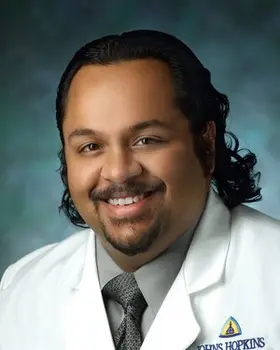
Dr. Ankur Butala specializes in the care of persons with complex neuropsychiatric conditions, including persons with advanced Parkinson Disease or other movement or neurodegenerative disorders. Upon graduating from a selective Physician-Scientist program at Albany Medical College, he joined the University of Massachusetts in an uncommon residency in both Neurology and Psychiatry. Dual-trained neuropsychiatrists such as Dr. Butala have experience with: Parkinson Disease and atypical Parkinsonism, Huntington Disease, Ataxia, Dystonia, early-onset dementia, traumatic brain injury and chronic traumatic encephalopathy, autism spectrum disorders, medication refractory mood and psychotic disorders, epilepsy and functional neurological disorders. In residency, he developed an interest in circuit models of brain function and how non-pharmacological approaches such as Neuromodulation and brain stimulation may be used to address treatment-resistant conditions. Consequently, he joined Johns Hopkins University School of Medicine as a Clinical and Research Fellow from 2015 to 2018, where he developed a skill set including deep brain stimulation, non-invasive brain stimulation (tDCS), and measurement of eye movements. Currently, Dr. Butala's clinical and research interests are in diagnosing and managing persons with advanced Parkinson's Disease, movement disorders, and neuropsychiatric conditions using neuromodulation, cannabinoids, and entheogens. He has ongoing multidisciplinary collaborations with colleagues at the Whiting School of Engineering - Center of Speech & Language Processing in using Machine-Learning Models and Artificial Intelligence to improve the detection and diagnosis of Movement and Neuropsychiatric disorders. LinkedIn https://www.linkedin.com/in/ankurbutalamd Videos Neurology: Junior Faculty Spotlight. Dr. Butala is rated as an Experienced provider by MediFind in the treatment of Opsoclonus-Myoclonus Syndrome. He is also highly rated in 42 other conditions, according to our data. His clinical expertise encompasses Parkinson's Disease, Corticobasal Degeneration, Movement Disorders, Drug Induced Dyskinesia, and Deep Brain Stimulation. Dr. Butala is board certified in American Board Of Psychiatry And Neurology.

Johns Hopkins Outpatient Center
Dr. Chua is an assistant professor in the Department of Neurology and Division of Movement Disorders at Johns Hopkins. He received his training at the University of Michigan, where he obtained medical and graduate degrees, then completed a residency in neurology and a combined clinical/research fellowship in movement disorders and neurodegeneration. Dr. Chua’s primary research interests are in neurodegenerative disease with a special focus on autophagy — an essential housekeeping process in cells that is particularly important for the health of neurons. Autophagy may provide a way to break down the buildup of toxic proteins found in neurodegenerative diseases, thereby forming the basis of new treatment strategies for these incurable conditions. He has received multiple research grants to support his work, including from the National Institute of Neurological Disorders and Stroke and the American Academy of Neurology (AAN). He is the primary author and co-author of multiple peer-reviewed scientific publications and online learning modules as part of the AAN. Dr. Chua is a contributing author to The Little Black Book of Neurology by Osama Zaidat, Alan Lerner and J. Douglas Miles, and he has been a peer reviewer for the scientific journals Autophagy, eLife and Neurobiology of Disease. He currently serves on the scientific advisory board for the Don't Forget Morgan Foundation, a private organization supporting research and outreach regarding the disease beta-propeller protein-associated neurodegeneration (BPAN). For more information about the Chua Lab, please visit https://chualab.jhmi.edu. Dr. Chua is rated as an Experienced provider by MediFind in the treatment of Opsoclonus-Myoclonus Syndrome. He is also highly rated in 5 other conditions, according to our data. His clinical expertise encompasses Primary Lateral Sclerosis, Parkinson's Disease, Movement Disorders, and Camptocormism. Dr. Chua is board certified in American Board Of Psychiatry And Neurology.
Office
Jay Bronder is a Neurologist practicing medicine in Potomac, Maryland. Dr. Bronder is rated as an Experienced provider by MediFind in the treatment of Opsoclonus-Myoclonus Syndrome. He is also highly rated in 6 other conditions, according to our data. His clinical expertise encompasses New Daily Persistent Headache (NDPH), Migraine, Memory Loss, and Seizures.
Neurological Medicine P.A.
Lawrence Whicker is a Neurologist practicing medicine in Greenbelt, Maryland. Dr. Whicker is rated as an Experienced provider by MediFind in the treatment of Opsoclonus-Myoclonus Syndrome. He is also highly rated in 35 other conditions, according to our data. His clinical expertise encompasses Autosomal Dominant Partial Epilepsy with Auditory Features, Memory Loss, Seizures, and Peripheral Neuropathy.
St. Agnes Healthcare Inc.
Zhaoming Chen is a Neurologist practicing medicine in Baltimore, Maryland. Dr. Chen is rated as an Experienced provider by MediFind in the treatment of Opsoclonus-Myoclonus Syndrome. He is also highly rated in 5 other conditions, according to our data. His clinical expertise encompasses Generalized Tonic-Clonic Seizure, Seizures, Periodic Limb Movement Disorder, and Peripheral Neuropathy.
University Of Maryland Medical Center Midtown Campus
Chandana Chauhan is a Neurologist practicing medicine in Baltimore, Maryland. Dr. Chauhan is rated as an Experienced provider by MediFind in the treatment of Opsoclonus-Myoclonus Syndrome. She is also highly rated in 4 other conditions, according to our data. Her clinical expertise encompasses Amyotrophic Lateral Sclerosis (ALS or Lou Gehrig's Disease), Spinal and Bulbar Muscular Atrophy, Spinal Muscular Atrophy (SMA), and Spinal Muscular Atrophy Type 3.
Shannon Dean is a Neurologist and a Pediatric Neurologist practicing medicine in Baltimore, Maryland. Dr. Dean is rated as an Experienced provider by MediFind in the treatment of Opsoclonus-Myoclonus Syndrome. She is also highly rated in 8 other conditions, according to our data. Her clinical expertise encompasses Stereotypic Movement Disorder, Tourette Syndrome, Transient Tic Disorder, and Conversion Disorder. Dr. Dean is board certified in American Board Of Psychiatry And Neurology.
Last Updated: 04/28/2026