MediFind found 42 doctor with experience in Ruvalcaba Syndrome near Maryland, US. Of these, 35 are Experienced and 7 are Advanced.
Rubenstein Child Health Building
Dr. Harry “Hal” Dietz is a professor of pediatrics, an associate professor of medicine and an assistant professor of neurological surgery at the Johns Hopkins University School of Medicine. He is the Victor A. McKusick Professor of Genetics and also serves as the director of the William S. Smilow Center for Marfan Syndrome Research. Recognized as the world’s leading authority on Marfan syndrome, Dr. Dietz conducted genomic mapping and research on therapeutic agents for deficiencies in the genetic protein fibrillin, which is linked to Marfan syndrome. His research contributions have made diagnosis of the condition patient-specific and accurate. He has received more than 50 national and international awards and honors, including the Antoine Marfan Award from the National Marfan Foundation and the Art of Listening Award from the American Heart Association. Dr. Dietz is an ad hoc reviewer for 19 different organizations, including the American Journal of Cardiology, the Archives of Pediatric and Adolescent Medicine, and the Journal of Clinical Investigation. Over more than two decades, Dr. Dietz has mentored 75 predoctoral and postdoctoral researchers. He has authored 282 original publications in peer-reviewed journals, 25 textbook chapters, and 239 abstracts, and has also delivered more than 440 lectures on Marfan syndrome and related genetic disorders. Dr. Dietz completed his B.S. at Duke University and received his M.D. from the SUNY Upstate School of Medicine. He completed a pediatric residency and a cardiology fellowship at Johns Hopkins University before joining the faculty in 1992. Dr. Dietz is rated as an Advanced provider by MediFind in the treatment of Ruvalcaba Syndrome. His top areas of expertise are Caudal Duplication, Neu Laxova Syndrome, Early Infantile Epileptic Encephalopathy, and Cardiomyopathy Hypogonadism Metabolic Anomalies.
The Kennedy Krieger Institute
After completing her bachelors of science degree in biochemistry from the City College of New York (CUNY), Dr. Smith-Hicks entered the Medical Scientist Training Program at Columbia University College of Physicians and Surgeons, where she obtained her M.D., Ph.D. in 2000. She trained in Pediatrics at the Albert Einstein College of Medicine and completed her Neurology and Pediatric Neurology training at the Johns Hopkins University School of Medicine in 2005. Dr. Smith-Hicks trained as a post-doctoral fellow in the Department of Neuroscience at Johns Hopkins University School of Medicine under the guidance of Dr. Paul Worley. She joined the faculty at Kennedy Krieger Institute in 2010 where she now sees patients with Autism Spectrum Disorder and Rett Syndrome, while conducting basic science research exploring disorders of learning and memory. Dr. Smith is rated as an Advanced provider by MediFind in the treatment of Ruvalcaba Syndrome. Her top areas of expertise are Rett Syndrome, Ruvalcaba Syndrome, Autism Spectrum Disorder, and Early Infantile Epileptic Encephalopathy.
Kennedy Krieger Institute
Dr. Jaqueline Weissman is an assistant professor in the Department of Neurology, Kennedy Krieger Institute, Department of Pediatrics Johns Hopkins Hospital and Institute of Genomic Medicine at Johns Hopkins Hospital. She is also director of the Center for Tuberous Sclerosis and Related Disorder at Kennedy Krieger Institute. She focuses on genetic and epigenetic causes of neurodevelopmental disorders - particularly intellectual disability - and how specific genetic and epigenetic changes lead to specific neuroanatomic, neurophysiologic and cognitive phenotypes. She is also interested in developing specific cognitive profiles in genetic syndromes as potential outcome measures for trials and to help localize deficits. Currently most of her research is centered around Kabuki Syndrome. Dr. Weissman received her B.A. with. Dr. Harris is rated as an Advanced provider by MediFind in the treatment of Ruvalcaba Syndrome. Her top areas of expertise are Borjeson-Forssman-Lehmann Syndrome, Coffin-Lowry Syndrome, Galactosialidosis, and Odontotrichomelic Syndrome.
Johns Hopkins Outpatient Center
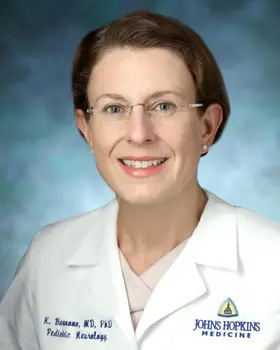
Dr. Barañano earned her M.D. and Ph.D. degrees from the Johns Hopkins University School of Medicine, where she also completed residencies in pediatrics and neurology, along with a fellowship in neurogenetics at the Kennedy Krieger Institute. Dr. Barañano is an Associate Professor of Clinical Neurology. She specializes in the diagnosis and management of rare neurogenetic disorders. She has a particular interest in the genetic control and function of the cerebellum and expertise in childhood-onset and inherited ataxias. She is a member of the multidisciplinary Fetal Management group and is available for prenatal consultations. Dr. Barañano's research includes collaborative efforts with the Johns Hopkins Department of Genetic Medicine and the Division of Neurogenetics at the Kennedy Krieger Institute. Dr. Baranano is rated as an Experienced provider by MediFind in the treatment of Ruvalcaba Syndrome. Her top areas of expertise are Hypotonia, Ohdo Syndrome, Say-Barber-Biesecker-Young-Simpson Variant, Focal or Multifocal Malformations in Neuronal Migration, and Hereditary Ataxia.
Johns Hopkins Children's Center
Dr. Jennifer Pardo Habashi is an assistant professor of pediatrics at the Johns Hopkins University School of Medicine. Her research focuses on cardiology. Dr. Habashi provides genetic cardiology services at the Center for Inherited Heart Disease at the Johns Hopkins Heart and Vascular Institute. She is currently evaluating the effectiveness of medications for the treatment of Marfan syndrome. Dr. Habashi received her undergraduate degree from Brown University. She earned her M.D. from the University of Maryland Medical School. She completed residencies at Montefiore Medical Center and Johns Hopkins. She performed a fellowship in pediatric cardiology at Johns Hopkins. Her work has been recognized with several awards, including a grant from the National Marfan Foundation for her research to help reduce the risks associated with pregnancy for women with Marfan syndrome. Dr. Pardo is rated as an Experienced provider by MediFind in the treatment of Ruvalcaba Syndrome. Her top areas of expertise are Congenital Contractural Arachnodactyly, Marfan Syndrome, Arachnodactyly, and Retinopathy Pigmentary Mental Retardation.
Johns Hopkins Health Care & Surgery Center - Green Spring Station, Lutherville
Dr. Elise Ng is as assistant professor of dermatology and the Director of Dermatologic Surgery in the Department of Dermatology at Johns Hopkins. She oversees the Johns Hopkins team of Mohs surgeons across four clinical sites, including the Johns Hopkins Outpatient Center, Greenspring Station, the Medical Pavilion at Howard County, and Sibley Memorial Hospital. She also serves as the Director of the Johns Hopkins Micrographic Surgery and Dermatologic Oncology Fellowship training program and is the clinical co-director of the Melanoma Program at the Sidney Kimmel Comprehensive Cancer Center. Her areas of clinical expertise include Mohs micrographic surgery, complex facial reconstruction following skin cancer surgery, melanoma, cosmetic scar revision, and surgical management of benign and malignant skin lesions. Dr. Ng graduated magna cum laude from Harvard College and was awarded the Harvard College Scholar Award for academic excellence. She received her medical degree from Columbia University College of Physicians and Surgeons and subsequently trained at New York University School of Medicine, one of the nation's top dermatology programs, where she was selected to be chief resident. Following residency, she completed a prestigious fellowship in Mohs micrographic surgery and dermatologic oncology with a focus on advanced reconstruction under the tutelage of one of the leaders in the field at Mount Sinai Hospital in New York. She serves as a reviewer for and her research has been published in premier peer-reviewed journals including Journal of the American Academy of Dermatology and Dermatologic Surgery. Dr. Ng joined the faculty of Johns Hopkins School of Medicine in 2017 and has been consistently recognized as a “Top Doctor” by Baltimore Magazine. Dr. Ng is rated as an Experienced provider by MediFind in the treatment of Ruvalcaba Syndrome. Her top areas of expertise are Basal Cell Skin Cancer, Squamous Cell Skin Carcinoma, Melanoma, and Bowen's Disease.
Johns Hopkins Bayview Medical Center
Dr. Joann Bodurtha is a professor of genetic medicine, pediatrics, and oncology at the Johns Hopkins University School of Medicine. Dr. Bodurtha is co-director of the regional genetics network NYMAC, co-director of the Biological Mechanisms theme in the Genes to Society Curriculum, co-director of the BIRCWH Advisory Board, Physician Advisor for the Dept. of Genetic Medicine, a member of the Advisory Committee of the JH-NHGRI Genetic Counseling program, and a member of the Johns Hopkins Medicine Institutional Review Board. She has appointments in the School of Public Health and School of Nursing. Her research focuses on risk communication and interdisciplinary genetic education. Prior to joining Johns Hopkins, Dr. Bodurtha was a professor of human and molecular genetics at VCU, where she had faculty appointments in the Departments of Pediatrics, Obstetrics-Gynecology, and Preventive Medicine and Community Health. She received her B.A. from Swarthmore College and her M.D. and M.P.H. with honors from Yale. After a year of research at the Nagasaki University School of Medicine as a Luce Scholar, she completed her residency in pediatrics at Children’s Hospital of Philadelphia and worked as a USPHS physician on the Turtle Mountain Chippewa Reservation in North Dakota. She completed her medical genetics fellowship at Virginia Commonwealth University (VCU) in 1987. Dr. Bodurtha joined the Johns Hopkins faculty in 2011. At VCU, Dr. Bodurtha helped start the Masters in Genetic Counseling program in 1990 and the Va-LEND (Leadership Education in Neurodevelopmental Disabilities) program in 1995. She served on the American Academy of Pediatrics Committee on Native American Child Health for ten years. She was the Richmond YMCA Woman of the Year in Science and Medicine in 1997. She received the VCU School of Medicine first Innovation in Teaching Award in 1999, the SCHEV Outstanding Faculty Award in 2006, the Genetic Alliance Art of Listening Award in 2008, the AUCD Professional Achievement Award in 2009, and the VCU WISDM Professional Achievement Award in 2010. A member of the Leadership Metro Richmond Class of 2000, she served as president of the WISDM (Women in Science, Dentistry, and Medicine) organization at VCU from 2000 to 2003. She has written more than 150 scientific articles, book chapters, and reviews and supervised more than 100 graduate students. She is committed to improving access to genetic services and helping make all communities be more welcoming. Dr. Bodurtha is rated as an Experienced provider by MediFind in the treatment of Ruvalcaba Syndrome. Her top areas of expertise are Ehlers-Danlos Syndrome (EDS), Micrognathia, Inborn Renal Aminoaciduria, and Blepharophimosis.
Johns Hopkins Outpatient Center
Dr. Grant Anhalt is a professor of dermatology at the Johns Hopkins University School of Medicine. His areas of clinical expertise include autoimmune skin diseases and dermatoimmunology. Dr. Anhalt serves as the director of the Dermatoimmunology Laboratory at the Johns Hopkins School of Medicine. He received his undergraduate degree and his M.D. from the University of Manitoba. He completed a residency in internal medicine at the Health Sciences Center in Winnipeg, Canada and a residency in dermatology at the University of Michigan. He performed a fellowship in immunodermatology at the University of Michigan Medical Center. Dr. Anhalt joined the Johns Hopkins faculty in 1982. He was interim chair of the Department of Dermatology from 1996 to 2001. His research interests include autoimmunity, bullous skin diseases and pemphigus and pemphigoid. Dr. Anhalt serves on the medical advisory board for the International Pemphigus & Pemphigoid Foundation. He has been recognized as a top doctor in the Washington Post Magazine, Baltimore Magazine and Castle Connolly Guide. He is a member of several professional organizations, including the American Academy of Dermatology, American Dermatologic Association and American Society for Clinical Investigation. CV http://www.hopkinsmedicine.org/dermatology/our_experts/CV/Anhalt_CV_2014.docx. Dr. Anhalt is rated as an Experienced provider by MediFind in the treatment of Ruvalcaba Syndrome. His top areas of expertise are Pemphigus Vulgaris, Pemphigus, Pemphigus Foliaceus, and Bullous Pemphigoid.
Rubenstein Child Health Building
Dr. Gerald Raymond is a clinical geneticist and neurologist at Johns Hopkins where he is also a professor of genetic medicine and neurology. He obtained his MD at the University of Connecticut and was trained in Pediatrics at Johns Hopkins Hospital and Neurology at the Mass. General Hospital. He received additional training in developmental neuropathology at the Universite Catholique de Louvain in Belgium and clinical genetics at the Harvard Program. Dr. Raymond’s research has been at the overlap of genetics and neurology with specific focus on peroxisomal disorders including adrenoleukodystrophy. He has been actively involved in newborn screening for ALD and in developing clinical follow-up programs. He has extensive experience in clinical management of neurogenetic issues including peroxisomal and lysosomal disorders. He presently serves as the Director of the Lysosomal Storage Disease program in the department of Genetic Medicine. Dr. Raymond is rated as an Experienced provider by MediFind in the treatment of Ruvalcaba Syndrome. His top areas of expertise are Adrenoleukodystrophy (ALD), CACH Syndrome, Zellweger Syndrome, and Leukodystrophy.
The Johns Hopkins Hospital
Dr. Richard Southard’s specialty is in pediatric radiology, with more than 25 years of experience in private practice and hospital settings. He joins Johns Hopkins from Phoenix Children’s Hospital, where he is vice chief of Radiology Operations. Previously, he served as a pediatric radiologist, partner and president of Radiology Consultants North Dallas, a Texas-based private practice group. He earned his medical degree from The Ohio State University before going on to an internship and residency in pediatric medicine at Nationwide Children’s Hospital, followed by a diagnostic radiology residency at The University of Pittsburgh Medical Center and fellowship in pediatric radiology at Pittsburgh Children’s Hospital. Dr. Southard’s research has focused on CT radiation dose reduction, imaging of congenital heart disease, implementation and validation of iterative reconstruction noise reduction techniques and dual-energy spectral CT applications in children. He joined the pediatric radiology faculty in February 2023 and will be working remotely from Arizona. Dr. Southard is rated as an Experienced provider by MediFind in the treatment of Ruvalcaba Syndrome. His top areas of expertise are Tracheobronchopathia Osteoplastica, Bronchogenic Cyst, Dextrocardia, and Collins Pope Syndrome.
Johns Hopkins Outpatient Center
Eugene Park is a Dermatologist in Baltimore, Maryland. Dr. Park is rated as an Experienced provider by MediFind in the treatment of Ruvalcaba Syndrome. Her top areas of expertise are Yunis-Varon Syndrome, Nevoid Basal Cell Carcinoma Syndrome, Scalp-Ear-Nipple Syndrome, and Acrodermatitis Enteropathica.
Johns Hopkins Outpatient Center
Dr. Probasco is a professor at the Johns Hopkins University School of Medicine Department of Neurology. He is the Vice Chair for Quality, Safety, and Service for the department. He also serves as the Director of the Johns Hopkins Division of Advanced Clinical Neurology as well as the Medical Director of the Johns Hopkins Inpatient General Neurology Service. He co-directs the Johns Hopkins Encephalitis Center and the Johns Hopkins Center for Refractory Status Epilepticus and Neuroinflammation. He cares for general neurology inpatients and outpatients, specializing in autoimmune and paraneoplastic syndromes as well as neurological immune-related adverse events following immunotherapies for cancer. After completing his undergraduate studies in biochemistry at the University of New Mexico, Dr. Probasco attended the University of Oxford as a Rhodes Scholar and earned a second undergraduate degree in psychology, philosophy and physiology. He went on to earn his medical degree at the University of California, San Francisco. He completed an internship in internal medicine at Johns Hopkins Bayview Medical Center and a residency in neurology at Johns Hopkins, where he was the faculty liaison/executive chief resident. He went on to complete an instructorship in inpatient general neurology at Johns Hopkins. Dr. Probasco’s research interests include increasing care value through improving outcomes, incorporation of patient experience of disease and treatment, the efficiency of care delivery, and diagnostic test utilization in general and specifically in relation to autoimmune and paraneoplastic neurological syndromes, including encephalitis. Finally, he is interested in the management of neurological immune-related adverse events following immunotherapies for the treatment of cancer. Dr. Probasco has been recognized at the departmental, institutional, and national levels for teaching and clinical excellence, including the American Academy of Neurology’s A.B. Baker Teacher Recognition Award and the Frank L. Coulson, Jr. Award from the Johns Hopkins Medicine Miller-Coulson Academy of Clinical Excellence. He is a past graduate of the Johns Hopkins Armstrong Institute Resident Scholars (AIRS) program in Patient Safety and Quality. As a faculty member, he was inducted into the Miller-Coulson Academy of Clinical Excellence in 2019. He serves as Editor-in-Chief of NEJM Journal Watch Neurology. Videos The impact of COVID-19 on the Department of Neurology‚Äôs clinical care and medical education programs. Dr. Probasco is rated as an Experienced provider by MediFind in the treatment of Ruvalcaba Syndrome. His top areas of expertise are Encephalitis, Anti-NMDA Receptor Encephalitis, Status Epilepticus, Creutzfeldt-Jakob Disease, and Gastrostomy.
Howard County Medical Pavilion
Dr. Couser obtained his bachelor’s degree from the University of Virginia and his Medical Doctorate from the Virginia Commonwealth University School of Medicine (VCU SOM). Dr. Couser’s ophthalmology residency was completed at Howard University where he served as co-chief resident in the last year of his residency. He received fellowship training in pediatric ophthalmology and adult strabismus at Emory University. Dr. Couser received a master’s degree in biotechnology from the Johns Hopkins University and completed a residency in clinical genetics at the University of North Carolina at Chapel Hill. He is one of only a few individuals currently board-certified by both the American Board of Ophthalmology and the American Board of Medical Genetics and Genomics. CV https://www.hopkinsmedicine.org/-/media/wilmer/documents/cvs/couser-cv Research Summary My primary research focus involves the identification and management of genetic eye diseases including rare inherited disorders affecting the eyes. Research and scholarly activities have been an integral component of my career path. I have been the principal investigator on 10 clinical trial/IRB studies and a co-investigator on others, participated with several committees or advisory panels related to research activities. I have been credited with over 120 book chapter, journal article and abstract publications. In addition, I served as the primary author/sole editor for a textbook titled Ophthalmic Genetic Diseases: A Quick Reference Guide to the Eye and External Ocular Adnexa Abnormalities, 1st Edition, published by Elsevier in 2018, which is one of only a few textbooks published in this subject area. I also served as a grant review panelist for the National Eye Institute Career Development Awards. Selected Publications *Couser NL, Masood MM, Strande NT, Foreman AKM, Crooks K, Weck KE, Lu M, Wilhelmsen KC, Roche M, Evans JP, Berg JS, Powell CM. 2015. The phenotype of multiple congenital anomalies- hypotonia-seizures syndrome 1: Report and review. Am J Med Genet Part A 9999A:1–6 *Couser NL, Lambert SR. Botulinum toxin: A treatment of consecutive esotropia in children. Strabismus 2012; 20(4):158-161 Couser NL, Lenhart PD, Hutchinson AK. Augmented Hummelsheim procedure to treat complete abducens nerve palsy. J AAPOS 2012;16(4):331-5 *Natario L. Couser, Maheer M. Masood, Arthur S. Aylsworth, and Roger E. Stevenson. Ocular manifestations in the X-linked intellectual disability syndromes. Ophthalmic Genet. 2017, Jan 23:1-12 *Couser NL, Brooks BP, Drack AV, Shankar SP. The evolving role of genetics in ophthalmology. Ophthalmic Genet. 2021 Jan 12:1-4. doi: 10.1080/13816810.2020.1868011. Dr. Couser is rated as an Experienced provider by MediFind in the treatment of Ruvalcaba Syndrome. His top areas of expertise are Epicanthal Folds, Strabismus, Brown Syndrome, and Hypotonia.
Kennedy Krieger Institute
I am a pediatric neurologist with expertise in epilepsy and electroencephalography (EEG). My clinical and research interests include genetics of epilepsy, medical management of patients with intractable epilepsy and presurgical evaluation of patients who are candidates for epilepsy surgery. Dr. Gupta is rated as an Experienced provider by MediFind in the treatment of Ruvalcaba Syndrome. His top areas of expertise are Seizures, Benign Rolandic Epilepsy, Rett Syndrome, Lennox-Gastaut Syndrome (LGS), and Thrombectomy.
Johns Hopkins Outpatient Center
Dr. Elrick specializes in the care of children with neuromuscular disorders, and EMG studies in children and adults. He has special interests in genetic neuromuscular and neurodegenerative disorders and Acute Flaccid Myelitis. Dr. Elrick earned his M.D. and Ph.D. in Neuroscience at the University of Michigan Medical School, studying inherited neurodegenerative disorders of childhood. He completed residency training in Pediatrics and Child Neurology, followed by a fellowship in Neuromuscular Medicine and Johns Hopkins before joining the faculty in 2019. Dr. Elrick's laboratory research interest is in understanding mechanisms of neurodegenerative disease, especially those affecting motor neurons. He studies disorders caused by genetic mutations in the nuclear pore complex, the main pathway for transport of material in and out of the nucleus of the cell, including Triple A Syndrome. He also participates in clinical research on Acute Flaccid Myelitis (AFM), aimed at understanding susceptibility to AFM in children, and defining clinical and EMG characteristics of illness and recovery in AFM. Dr. Elrick is rated as an Experienced provider by MediFind in the treatment of Ruvalcaba Syndrome. His top areas of expertise are Cramp-Fasciculation Syndrome, Acute Flaccid Myelitis (AFM), Dysferlinopathy, and Duchenne Muscular Dystrophy.
The Kennedy Krieger Institute
Dr. Comi graduated from SUNY Buffalo School of Medicine and received her training in pediatrics at the Children's Hospital of Buffalo and her child neurology training at Johns Hopkins Medicine. Her clinical specialization is in the treatment of the neurological aspects of Sturge-Weber syndrome and other disorders related to capillary malformation. Dr. Comi's clinical research interests focus on improving the early diagnosis and treatment of brain involvement in Sturge-Weber syndrome in order to prevent ischemic brain injury in affected infants and young children, and on studies to understand what causes Sturge-Weber syndrome. Her laboratory research work deals with the pathogenesis of Sturge-Weber syndrome, recently shown to be caused by a somatic mutation, and on developing new drug targets, screening assays, models and therapeutic strategies for Sturge-Weber syndrome. Her lab group also works on developing better neuroprotective and neuroregenerative responses to brain injury resulting from impaired blood flow to the brain. Dr. Comi is rated as an Experienced provider by MediFind in the treatment of Ruvalcaba Syndrome. Her top areas of expertise are Sturge-Weber Syndrome, Parkes Weber Syndrome, Stork Bite, Epilepsy in Children, and Endovascular Embolization.
Children's National Hospital
Ramon Sanchez is a Pediatric Radiologist in Silver Spring, Maryland. Dr. Sanchez is rated as an Experienced provider by MediFind in the treatment of Ruvalcaba Syndrome. His top areas of expertise are Hirschsprung Disease, Scoliosis, Caudal Regression Syndrome, and Spondylocarpotarsal Synostosis Syndrome.
Dermatology Associates Of Knoxville-Dowell Springs
Edward Primka is a Dermatologist in Leonardtown, Maryland. Dr. Primka is rated as an Experienced provider by MediFind in the treatment of Ruvalcaba Syndrome. His top areas of expertise are Squamous Cell Skin Carcinoma, Basal Cell Skin Cancer, Bowen's Disease, and Liver Spots.
Dept Of Transfusion Medicine/Nih Clinical Center
Isaac Brownell is a Dermatologist in Bethesda, Maryland. Dr. Brownell is rated as an Experienced provider by MediFind in the treatment of Ruvalcaba Syndrome. His top areas of expertise are Merkel Cell Carcinoma, Muir-Torre Syndrome, Warts, and Nummular Eczema.
Kennedy Krieger Institute
Eric Mallack is a Pediatric Neurologist and a Neurologist in Baltimore, Maryland. Dr. Mallack is rated as an Experienced provider by MediFind in the treatment of Ruvalcaba Syndrome. His top areas of expertise are Adrenoleukodystrophy (ALD), CACH Syndrome, Early Infantile Epileptic Encephalopathy, and Leukodystrophy.
Last Updated: 01/09/2026