The 20 Best Subdural Effusion Doctors Near Me in Baltimore, MD
Find the Top Subdural Effusion Experts and Specialists

Johns Hopkins Outpatient Center
Dr. Eric Jackson specializes in the evaluation and treatment of patients with a broad range of neurosurgical disorders, including congenital malformations of the brain and spine, hydrocephalus (including endoscopic treatment), chiari malformation, craniosynostosis, spinal dysraphism/tethered cord, brain and spinal cord tumors, and traumatic brain injuries. He is the Principal Investigator for several multi-institution research studies, including: Hydrocephalus Clinical Research Network: currently investigating endoscopic surgery vs shunting for the treatment of hydrocephalus in infants in a $10M randomized trial funded by the NIH Park Reeves Syringomyelia Research Consortium Advancing the treatment for pediatric craniopharyngioma, identifying biological targets for molecular therapy A multi-institutional trial investigating a non-invasive eye tracking device for assessing increased intracranial pressure. Dr. Jackson is rated as an Advanced provider by MediFind in the treatment of Subdural Effusion. He is also highly rated in 12 other conditions, according to our data. His clinical expertise encompasses Hydrocephalus, Chiari Malformation, Chiari Malformation Type 2, Posterior Fossa Decompression, and Endoscopy. Dr. Jackson is board certified in American Board Of Neurological Surgery.
The Johns Hopkins Hospital
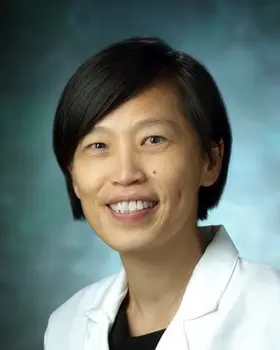
Dr. Doris Da May Lin is an Associate Professor in the Johns Hopkins Medicine Department of Radiology and Radiological Science. She specializes in neuroradiology. Dr. Lin received her B.A. in chemistry from the University of Pennsylvania, and then pursued a joint M.D./Ph.D. degree at the Yale University School of Medicine, with graduate training in the neurosciences. She completed a medical internship at the University of Pennsylvania Hospital and a diagnostic radiology residency at New York Presbyterian Hospital-Cornell. After a two-year neuroradiology fellowship, she joined the faculty at Johns Hopkins. Dr. Lin is rated as an Advanced provider by MediFind in the treatment of Subdural Effusion. She is also highly rated in 3 other conditions, according to our data. Her clinical expertise encompasses Parkes Weber Syndrome, Sturge-Weber Syndrome, Subdural Effusion, Meningioma, and Endovascular Embolization. Dr. Lin is board certified in American Board Of Radiology.

The Johns Hopkins Hospital
Tej Azad is a Neurosurgery provider practicing medicine in Baltimore, Maryland. Dr. Azad is rated as an Experienced provider by MediFind in the treatment of Subdural Effusion. He is also highly rated in 10 other conditions, according to our data. His clinical expertise encompasses Spinal Tumor, Traumatic Brain Injury, Subdural Hematoma, Spinal Fusion, and Laminectomy.
Johns Hopkins Outpatient Center
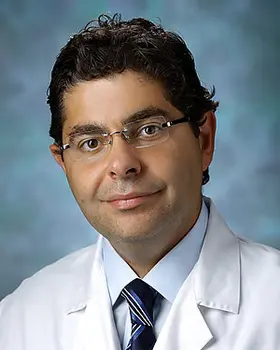
Dr. Ali Bydon is a renowned neurosurgeon and director of the Division of Spine Surgery and the Neurosurgical Spine Center at the Johns Hopkins University School of Medicine. As the endowed Ziya Gokaslan Professor of Neurosurgery, he is dedicated to advancing the field through innovative clinical practices and extensive research. Additionally, Dr. Bydon serves as the vice chair for strategic planning within the Department of Neurosurgery. Dr. Bydon’s clinical practice is centered on degenerative disorders of the spine, spinal tumors, spinal trauma and complex spinal reconstruction. He is an esteemed member of the American Association of Neurological Surgeons and the Congress of Neurological Surgeons. Dr. Bydon earned his medical degree from the University of Michigan School of Medicine in 1999 and completed his residency in neurological surgery at Henry Ford Hospital in Detroit, where he graduated with distinction in 2006. He further honed his skillset by completing fellowships in minimally invasive spine surgery and the surgical treatment of peripheral nerves, followed by a one-year instructorship in spinal oncology and complex reconstructive spinal surgery at Johns Hopkins in 2007. His research focuses on spinal biomechanics and surgical outcomes. He has co-authored over 265 peer-reviewed manuscripts and numerous book chapters. Dr. Bydon has made significant contributions to the understanding of optimal surgical management for conditions such as spinal synovial cysts, cervical myelopathy, lumbar spondylolisthesis, ossified posterior longitudinal ligament, cervical degenerative disorders, cervical myelopathy, thoracic myelopathy and metastatic diseases to the spine, among others. Dr. Bydon has presented at more than 200 national and international scientific meetings, underscoring his commitment to advancing knowledge in the field. An educator who has trained over 75 practicing neurosurgeons, Dr. Bydon has received prestigious accolades, including the Richard Otenasak Faculty Teaching Award and the Chairman’s Neurosurgical Teacher of the Year Award. His leadership roles have included serving on the residency review committee and the patient access committee at Johns Hopkins, as well as a yearlong term as the neurosurgical representative on the Johns Hopkins Faculty Senate. He has also served as a medical director with Johns Hopkins Medicine International, overseeing clinical and educational activities at renowned institutions in Lebanon and Brazil. Dr. Bydon has performed more than 5,000 surgeries. His commitment to excellence in patient care, education and research makes him a leading authority in spine surgery, dedicated to providing transformative care to patients seeking relief and recovery. Dr. Bydon is rated as an Experienced provider by MediFind in the treatment of Subdural Effusion. He is also highly rated in 17 other conditions, according to our data. His clinical expertise encompasses Spinal Stenosis, Spondylolisthesis, Invertebral Disc Disease, Laminectomy, and Spinal Fusion. Dr. Bydon is board certified in American Board Of Neurological Surgery.
Office
David Dreizin is a Radiologist practicing medicine in Baltimore, Maryland. Dr. Dreizin is rated as an Experienced provider by MediFind in the treatment of Subdural Effusion. He is also highly rated in 1 other condition, according to our data. His clinical expertise encompasses Subarachnoid Hemorrhage, Subdural Effusion, Pleurisy, Splenectomy, and Liver Embolization.
UMMC Department Of Radiology
Thorsten Fleiter is a Radiologist practicing medicine in Baltimore, Maryland. Dr. Fleiter is rated as an Experienced provider by MediFind in the treatment of Subdural Effusion. His clinical expertise encompasses Subarachnoid Hemorrhage, Subdural Effusion, Pleurisy, and Pleural Effusion.
Johns Hopkins Hospital
Alessandro Olivi is a Neurosurgery provider practicing medicine in Baltimore, Maryland. Dr. Olivi is rated as an Experienced provider by MediFind in the treatment of Subdural Effusion. He is also highly rated in 27 other conditions, according to our data. His clinical expertise encompasses Glioblastoma, Astrocytoma, Glioma, Microvascular Decompression, and Craniectomy.
Last Updated: 06/30/2026