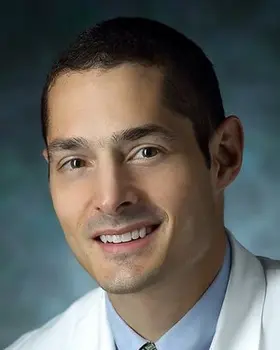
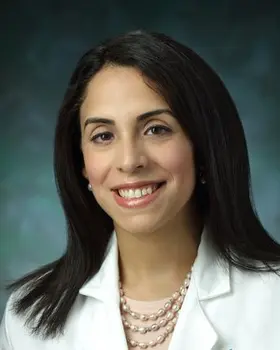
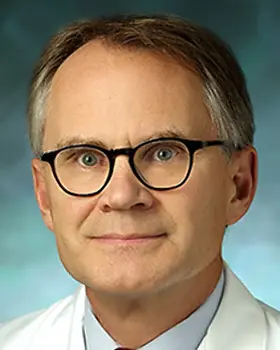
MediFind found 113 doctor with experience in Short QT Syndrome near Baltimore, MD. Of these, 97 are Experienced and 16 are Advanced.
Johns Hopkins Outpatient Center
Jon R. Resar received his M.D. from the Medical College of Wisconsin in 1985. He completed an internal medicine residency at The Johns Hopkins Hospital and fellowships in cardiovascular medicine and interventional cardiology at The Johns Hopkins Hospital and Johns Hopkins University School of Medicine. He joined the faculty at Johns Hopkins in 1992 and is currently a Professor of Medicine/Cardiology. He was the past Director of the Adult Catheterization Laboratory and Interventional Cardiology at the Johns Hopkins Hospital. His field of specialization is management of coronary artery disease and valvular heart disease. Dr. Resar holds memberships in the American Heart Association and is a Fellow of the American College of Cardiology. Dr. Resar is rated as an Advanced provider by MediFind in the treatment of Short QT Syndrome. His top areas of expertise are Aortic Valve Stenosis, Heart Attack, Atrial Septal Defect (ASD), Aortic Valve Replacement, and Transcatheter Aortic Valve Replacement (TAVR).
Johns Hopkins Outpatient Center
Dr. Hugh Calkins is the Catherine Ellen Poindexter Professor of Cardiology and Director of the Electrophysiology Laboratory and Arrhythmia Service at the Johns Hopkins Hospital. He is an internationally recognized expert on catheter ablation, atrial fibrillation, syncope, arrhythmogenic right ventricular dysplasia (ARVD) and arrhythmia management. Dr. Calkins attended Williams College and Harvard Medical School before training in medicine at Massachusetts General Hospital. He received his cardiology training at Johns Hopkins. His first faculty position was at the University of Michigan, where he directed the Pacemaker Service, and he returned to Johns Hopkins as director of the Arrhythmia Service in 1992. Dr. Calkins is an Associate Editor of the Journal of Cardiovascular Electrophysiology and is on the editorial board of many other cardiology journals. He is a former member of the American Board of Internal Medicine Electrophysiology Boards Test Writing Committee. Dr. Calkins is a fellow of the American College of Cardiology, the American Heart Association and the Heart Rhythm Society. He led a 44-member international task force whose 2012 Expert Consensus Statement gave recommendations for treatment and research of atrial fibrillation. Dr Calkins is a past president of the Heart Rhythm Society and was elected to be a member of the Miler Coulsen Academy of Clinical Excellence in 2014. Dr. Calkins has published more than 500 articles and book chapters on a large variety of cardiac arrhythmias. His research has focused predominantly on catheter ablation, atrial fibrillation, syncope, and arrhythmogenic right ventricular dysplasia. Dr. Calkins has also written extensively on most aspects of heart rhythm disorders and their treatment. Dr. Calkins is rated as an Advanced provider by MediFind in the treatment of Short QT Syndrome. His top areas of expertise are Atrial Fibrillation, Arrhythmias, Cardiomyopathy, Cardiac Ablation, and Heart Transplant.
The Johns Hopkins Hospital
Dr. Thomas Stephen Metkus is an assistant professor of cardiology at the Johns Hopkins University School of Medicine. His research focuses on using cardiac physiology for risk stratification and therapeutics in non-cardiac critical illness such as sepsis and the acute respiratory distress syndrome (ARDS), and optimizing the management of non-cardiac organ failure in primary cardiac diseases such as heart failure and acute coronary syndromes. Dr. Metkus received his undergraduate degree from Boston University College of Engineering. He earned a medical degree from the University of Pennsylvania School of Medicine and completed a residency at Brigham and Women’s Hospital. After completing residency, Dr. Metkus was a clinical fellow at both Harvard Medical School and Johns Hopkins Hospital. Prior to joining the faculty at the Johns Hopkins Medical School he was an instructor of medicine at the Harvard Medical School. His educational focus includes teaching clinical cardiology and critical care, echocardiography, and electrocardiography to students, residents, and fellows at the Johns Hopkins Hospital. Videos Dr. Thomas Metkus. Dr. Metkus is rated as an Advanced provider by MediFind in the treatment of Short QT Syndrome. His top areas of expertise are Heart Attack, Apoplexy, Arterial Embolism, Heart Bypass Surgery, and Coronary Artery Bypass Graft (CABG).
The Johns Hopkins Hospital
Dr. Michael Kelemen is a general cardiologist for the Johns Hopkins Heart and Vascular Institute in the Department of Medicine. His research in cardiac rehabilitation demonstrated the power of exercise as a treatment for hypertension, high cholesterol, and recovery from cardiac events. Dr. Kelemen is an associate professor of medicine in the Johns Hopkins School of Medicine. Dr. Kelemen received his medical degree from the University of Pennsylvania Health System School of Medicine. He completed his residency in medicine at University Hospitals of Cleveland, and pursued cardiology fellowships at the University of California, San Francisco School of Medicine and at the Wyman Park Health System in Baltimore. Dr. Kelemen is active in community health issues, having served on the boards of the Health Alliance and The Horizon Foundation, which provide medical and mental health services to underserved populations. As the founding medical director of the Prescribed Active Cardiac Exercises (PACE) program at Catonsville Community College in 1976, he performed the research that demonstrated the benefits of exercise for cardiac patients. Dr. Kelemen is rated as an Advanced provider by MediFind in the treatment of Short QT Syndrome. His top areas of expertise are Heart Attack, Apoplexy, Postural Orthostatic Tachycardia Syndrome (POTS), and Brugada Syndrome.
Johns Hopkins Bayview Medical Center
Dr. Jeffrey C. Trost is an associate professor of medicine at the Johns Hopkins School of Medicine as well as director of the Cardiac Catheterization Laboratory at Johns Hopkins Bayview Medical Center. His research there focuses on cardiac disease and cardiovascular medicine. He is also currently deputy director of clinical activities at Johns Hopkins Bayview Medical Center. Dr. Trost earned his undergraduate degree at Princeton University and medical degree at the University of Pennsylvania School of Medicine. He completed a residency at the University of Texas Southwestern School of Medicine where he was chief resident from 1999-2000. He was an assistant professor of internal medicine at the University of Texas Southwestern School of Medicine and an interventional cardiovascular fellow at Brown University before joining the Johns Hopkins faculty in 2005. Dr. Trost was most recently recognized with the 2016 Hopkins Medicine Clinical Recognition Award for Quality and Safety and the 2016 Hopkins Cardiology Fellows’ Teaching Award. Dr. Trost is rated as an Advanced provider by MediFind in the treatment of Short QT Syndrome. His top areas of expertise are Heart Attack, Apoplexy, Arterial Embolism, Coronary Artery Bypass Graft (CABG), and Heart Bypass Surgery.
Johns Hopkins Bayview Medical Center
Dr. Marlene Stephanie Williams is an Associate professor at the Johns Hopkins University School of Medicine. Her research focuses on coronary atherosclerosis and platelet function, and her particular focus is on platelet function as it relates to the acute coronary syndrome. Dr. Williams has examined platelet function and its correlation to platelet functional genomics and runs a platelet physiology laboratory on the Johns Hopkins Bayview campus. The goal for her cardiovascular platelet laboratory has been to identify the etiology of platelet dysfunction in many disease states and apply methods that may improve this dysfunction that may eventually be translated to therapies for patients with cardiovascular disease. She is a prior recipient of an NIH career mentored award (K23) examining platelet functional genomics and an NIH RO1 award addressing platelet serotonin signaling in depression and heart disease. Dr. Williams has several publications covering platelet functional changes in settings of interventional cardiology, acute coronary syndrome, and heart disease and depression. She has participated in several NHLBI advisory committees, review groups, and study sections. Dr. Williams has been the Course Director, of the advanced clinical clerkship in coronary intensive care at the Bayview Medical center and has mentored many medical residents and cardiology fellows. Dr. Williams received her undergraduate degree in biochemistry from McGill University. She earned a medical degree from the Columbia University College of Physicians & Surgeons and completed a residency at Johns Hopkins Hospital. After completing a residency, Dr. Williams was a cardiology fellow at Mount Sinai Hospital and Johns Hopkins Hospital. Dr. Williams is currently the Clinical Director of Cardiology at Johns Hopkins Bayview Medical Center. Dr. Williams is rated as an Advanced provider by MediFind in the treatment of Short QT Syndrome. Her top areas of expertise are Heart Attack, Apoplexy, Arterial Embolism, Pacemaker Implantation, and Hormone Replacement Therapy (HRT).
Johns Hopkins Bayview Medical Center
Dr. Sammy Zakaria is an Associate Professor of Medicine at the Johns Hopkins University School of Medicine (JHUSOM). Because he specializes in critical care cardiology, he predominately works in the Cardiac Intensive Care Unit (CICU) at the Johns Hopkins Bayview Medical Center (JHBMC) as well as the Cardiac Care Unit at Johns Hopkins Hospital (JHH). He also serves as the Director of the JHBMC CICU. His practice encompasses most of cardiology, with many of his patients having had life-threatening cardiac issues, such as shock, end-stage heart failure, or multi-organ system failure. He also has an interest in caring for pregnant women with cardiovascular disease, including those with severe preeclampsia, and his clinical research efforts focus on the effects of preeclampsia on the cardiovascular system. Additionally, his other research areas of interest include critical care issues affecting cardiac patients and studying innovations in medical education. Dr. Zakaria is heavily involved in medical education and serves as an educator for students, residents, fellows, and staff. He served as a JHUSOM Colleges Advisor for 10 years and was responsible for teaching and mentoring a cohort of medical students during their time in medical school. In his role as Interim Program Director for the JHBMC Internal Medicine Residency Program, he has helped to increase the JHBMC Internal Medicine residency program’s nationally-recognized reputation for excellence by championing curricular innovations, resident scholarly work, and resident academic careers. He also is a Core Faculty member for the JHH Osler Internal Medicine residency program and for the Johns Hopkins Cardiovascular Disease fellowship. As a result of his efforts in education, he has been honored with multiple teaching awards, including the Outstanding Achievement in Teaching Award from the Johns Hopkins Institute for Excellence in Education. Dr. Zakaria earned his undergraduate degree from the Pennsylvania State University, his medical degree from Jefferson Medical College, and his master of public health degree from the University of Maryland. He trained at Thomas Jefferson University Hospital in Internal Medicine and also practiced there as a faculty attending for one year. He then completed a fellowship in cardiovascular disease at the University of Maryland and subsequently a Critical Care Medicine fellowship at the University of California San Francisco. He joined the Johns Hopkins faculty in 2008. Dr. Zakaria is rated as an Advanced provider by MediFind in the treatment of Short QT Syndrome. His top areas of expertise are Apoplexy, Heart Attack, Arterial Embolism, Inappropriate Sinus Tachycardia (IST), and Pacemaker Implantation.
Johns Hopkins Bayview Medical Center
Dr. Monica Mukherjee is an adult cardiologist and an Associate Professor of Medicine at the Johns Hopkins University Division of Cardiology and specializes in advanced cardiac imaging. She serves as Medical Director of the Echocardiography Lab at Johns Hopkins Bayview Medical Center, and as Associate Director of the Johns Hopkins Echocardiography program across the institution. Dr. Mukherjee graduated Summa Cum Laude with dual Bachelors of Science in Psychology and Behavioral Neurosciences from the University of Florida. She received her Doctorate in Medicine from the George Washington University in Washington, DC, and internal medicine residency at Drexel University, before returning to George Washington to complete her fellowship in cardiovascular disease. She has a MPH from the Johns Hopkins Bloomberg School of Public Health with a special concentration in Epidemiological and Biostatistical Methods for Public Health and Clinical Research. Dr. Mukherjee has an accomplished academic career with multiple research awards focused on right ventricular remodeling in heart failure, pulmonary hypertension, and scleroderma. She was the recipient of the 2020 Johns Hopkins University Clinician Scientist Award and also has been funded by the National Institutes of Health, the Scleroderma Foundation, and the CHEST Foundation. She was awarded the Top 25 Young Investigators Award from the American Society of Echocardiography in 2016. Dr. Mukherjee is rated as an Advanced provider by MediFind in the treatment of Short QT Syndrome. Her top areas of expertise are Pulmonary Hypertension, Heart Attack, Systemic Sclerosis (SSc), Tissue Biopsy, and Pacemaker Implantation.
Johns Hopkins Outpatient Center
Joseph Marine, MD, MBA, FACC, FHRS, is a clinical cardiac electrophysiologist who practices primarily at the Johns Hopkins Hospital in Baltimore, Maryland. He is a Professor of Medicine at the Johns Hopkins University School of Medicine and holds appointments as Vice-Director of Operations for the Division of Cardiology and Section Chief of Cardiology for Johns Hopkins Community Physicians. He trained at UC San Francisco Medical School, Brigham and Women’s Hospital/Harvard Medical School, Boston University Medical Center, and Beth Israel Deaconess Medical Center. Dr. Marine has lectured widely on a variety of arrhythmia topics and has served as a co-director of the American College of Cardiology (ACC) Cardiovascular Overview and Board Review Course for 10 years. He currently serves on the ACC Board of Governors and is co-editor of the ACC/HRS EP Self-Assessment Program. He also serves on other committees for the ACC, the Heart Rhythm Society, and MedChi. He is co-author of more than 130 original research and review articles and has served on writing committees for several national cardiology practice and training guidelines. As a clinical cardiac electrophysiologist, Dr. Marine specializes in the diagnosis and treatment of arrhythmias, which are heart rhythm disorders that cause the heart to beat too rapidly, too slowly, or irregularly. His research focuses on further improving the safety and effectiveness of catheter ablation and other treatments for atrial fibrillation and other atrial and ventricular arrhythmias. Dr. Marine is rated as an Experienced provider by MediFind in the treatment of Short QT Syndrome. His top areas of expertise are Atrial Fibrillation, Atrioventricular Nodal Reentrant Tachycardia (AVNRT), Arrhythmias, Cardiac Ablation, and Heart Transplant.
Johns Hopkins Outpatient Center
"Originally from Wisconsin, Dr. Czarny attended the University of Wisconsin where he majored in molecular biology. After medical school at the Johns Hopkins University School of Medicine, he completed an internal medicine residency at the Brigham and Women’s Hospital in Boston followed by cardiovascular disease, interventional cardiology, and structural heart disease fellowships at Johns Hopkins. Currently, he is a faculty member in interventional cardiology and performs heart catheterizations and coronary artery stenting for patients with stable coronary artery disease (CAD) and myocardial infarctions (""heart attacks"") at both the Johns Hopkins Hospital and the Johns Hopkins Bayview Medical Center. He is also a member of the Structural Heart Disease team and performs minimally invasive, catheter-based treatments for structural heart disease at the Johns Hopkins Hospital including transcatheter aortic valve replacement (TAVR) for aortic valve stenosis, valve repair/replacement procedures for mitral valve regurgitation and stenosis, patent foramen ovale closure, atrial septal defect closure, alcohol septal ablation for hypertrophic cardiomyopathy, and left atrial appendage occlusion with the Watchman(TM) device. He sees patients in his structural heart disease clinics at both the Johns Hopkins Hospital and the Johns Hopkins Bayview Medical Center. Dr. Czarny's research interests include the safety of cardiac stenting at hospitals without cardiac surgery backup and outcomes of catheter-based structural heart procedures.". Dr. Czarny is rated as an Experienced provider by MediFind in the treatment of Short QT Syndrome. His top areas of expertise are Aortic Valve Stenosis, Apoplexy, Heart Attack, Aortic Valve Replacement, and Transcatheter Aortic Valve Replacement (TAVR).
Johns Hopkins Outpatient Center
Thorsten Leucker is a Cardiologist in Baltimore, Maryland. Dr. Leucker is rated as an Experienced provider by MediFind in the treatment of Short QT Syndrome. His top areas of expertise are Apoplexy, Heart Attack, Heterozygous Familial Hypercholesterolemia (HeFH), and Homozygous Familial Hypercholesterolemia (HoFH).
Johns Hopkins Outpatient Center
Dr. Emmanouil Tampakakis is an Assistant Professor of Medicine at Johns Hopkins University School of Medicine as well as an attending physician at Johns Hopkins Hospital. His research focuses on Stem Cell Biology and Heart Development and Regeneration. Specifically, Dr. Tampakakis lab aims to understanding the biology and regenerative potential of stem cell-derived cardiomyocytes and uses human induced pluripotent stem cells and animal models to model human cardiac disease and deciphering the mechanisms of cardiac maturation. Dr. Tampakakis also holds a cardiology fellowship at Johns Hopkins Hospital. Dr. Tampakakis received his undergraduate degree and M.D. from the University of Crete. He completed an internal medicine residency at Boston University Medical Center. Prior to joining Johns Hopkins in 2012, Dr. Tampakakis was a research fellow in Dr. J. Vita’s laboratory of Vascular Biology at Boston University School of Medicine. At Johns Hopkins, he was a post-doc in the labs of Drs Chulan Kwon and David Kass. Dr. Tampakakis is the recipient of several awards including the AHA outstanding early career investigator award and the ACC Presidential Career Development Award and has received funding from the AHA and the NIH. Videos Meet Our Expert - Emmanouil Tampakakis Recent News Articles and Media Coverage Hopkins researchers discover newborn rats hold secret to manufacturing human heart cells., The Baltimore Sun, (February 11, 2017). Dr. Tampakakis is rated as an Experienced provider by MediFind in the treatment of Short QT Syndrome. His top areas of expertise are Heart Attack, Apoplexy, Arterial Embolism, and Heart Failure.
Johns Hopkins Outpatient Center
Degrees: BS: Massachusetts Institute of Technology 1981 Electrical Engineering MS: Massachusetts Institute of Technology 1983 Electrical Engineering PhD: Massachusetts Institute of Technology 1987 Electrical Engineering MD: Harvard 1987 Medicine Professional Appointments: 1987-1988 Intern in Medicine, Brigham and Women's Hospital 1988-1990 Resident in Medicine, Brigham and Women's Hospital 1988-1990 Research Scientist, Harvard M.I.T. Division of H.S.T. 1990-1993 Fellow in Cardiology, Johns Hopkins University 1993-1998 Assistant Professor of Medicine, Johns Hopkins University 1996- Co-Director of Cardiac Electrophysiology, Johns Hopkins Hospital 1998-2005 Associate Professor of Medicine, Johns Hopkins University 2002-2005 Associate Professor of Biomedical Engineering, Johns Hopkins University 2005- Professor of Medicine, Johns Hopkins University 2005- Professor of Biomedical Engineering, Johns Hopkins University. Dr. Berger is rated as an Experienced provider by MediFind in the treatment of Short QT Syndrome. His top areas of expertise are Atrial Fibrillation, Arrhythmias, Ventricular Tachycardia, Cardiac Ablation, and Pacemaker Implantation.
Johns Hopkins Outpatient Center
Dr. Katherine Wu is a general cardiologist for the Heart and Vascular Institute at Johns Hopkins Medicine with an interest in caring for patients with cardiomyopathies, coronary artery disease, and valvular heart disease as well as those interested in cardiovascular prevention. She has additional expertise in non-invasive cardiology imaging techniques. Dr. Wu received her medical degree from the University of Pennsylvania Health System School of Medicine, and completed her residency and a cardiology fellowship at the Johns Hopkins University School of Medicine. She joined the School of Medicine faculty in 2000. Dr. Wu's research interests include improving individualized risk prediction for sudden cardiac death and heart failure by developing and validating methods that incorporate novel cardiac imaging indices. Her lab is funded by the NIH/NHLBI. Dr. Wu has more than 70 peer-reviewed publications and serves on the editorial board of the Journal of Cardiovascular Magnetic Resonance and Circulation Cardiovascular Imaging and is a standing member of the NIH Clinical and Integrative Cardiovascular Sciences Study Section. Dr. Wu is rated as an Experienced provider by MediFind in the treatment of Short QT Syndrome. Her top areas of expertise are Cardiomyopathy, Atrial Fibrillation, Heart Attack, and Pulmonary Hypertension.
Johns Hopkins Children's Center
Caridad De La Uz is a Pediatrics provider in Baltimore, Maryland. Dr. De La Uz is rated as an Experienced provider by MediFind in the treatment of Short QT Syndrome. Her top areas of expertise are DiGeorge Syndrome, Double Inlet Left Ventricle, Wolff-Parkinson-White Syndrome, and Tetralogy of Fallot.
Johns Hopkins Outpatient Center
Dr. Bimal H. Ashar is a Professor of Clinical Medicine at the Johns Hopkins University School of Medicine. He serves as the Interim Director of the Division of General Internal Medicine, Clinical Director of the Division of General Internal Medicine, and Director of the Executive & Preventive Health Program. Named one of the “Best Doctors in America”, Dr. Ashar’s primary research interests include preventive medicine, dietary supplements and medical education, and he has authored numerous book chapters and articles on these topics. Dr. Ashar is also an editor of The Johns Hopkins Internal Medicine Board Review book and a former consulting editor for the Medical Clinics of North America. Dr. Ashar is an active member of the Society of General Internal Medicine and has served as president for the mid-Atlantic region. He is also a fellow of the American College of Physicians. He obtained his medical degree from the University of Maryland School of Medicine. He completed his residency in internal medicine at Case Western Reserve University/University Hospitals of Cleveland. He subsequently became chief resident and a faculty member at Case Western. Dr. Ashar left Cleveland in 1998 and joined the faculty in the Division of General Internal Medicine at Johns Hopkins University. This provider is registered with the Florida Department of Health to perform telehealth services for patients in Florida and has active medical licenses in Maryland and Washington, D.C.. Videos 2017 Excellence in Service and Professionalism Award - Bimal Ashar, M.D., The Johns Hopkins Hospital Recent News Articles and Media Coverage Young MDs Hazy on Dietary Supplements, Wall Street Journal, May 14, 2007. Dr. Ashar is rated as an Experienced provider by MediFind in the treatment of Short QT Syndrome. His top areas of expertise are Mevalonate Kinase Deficiency, Hypertension, Brugada Syndrome, and Postural Orthostatic Tachycardia Syndrome (POTS).
Johns Hopkins Outpatient Center
Dr. Chiadi Ndumele is the Director of Obesity and Cardiometabolic Research, Director of the Heart Failure Prevention Program and Associate Professor of Medicine and Epidemiology in the Division of Cardiology at Johns Hopkins University. Dr. Ndumele is a preventive cardiologist with doctorate level training in epidemiology, who leads a research program related to characterizing the relationship of obesity and cardiometabolic risk factors with the development of cardiovascular disease, with a particular focus on heart failure risk, and to refining strategies for cardiovascular disease prevention. His work additionally addresses the impact of social determinants of health on cardiometabolic risk factors and downstream cardiovascular outcomes. Dr. Ndumele received his M.D. from Harvard University and his Internal Medicine training at Brigham and Women’s Hospital, where he also served as Chief Medical Resident. He subsequently trained in Cardiology at Johns Hopkins University, where he was also Chief Cardiology Fellow in his final year and where he also received his MHS and PhD in Epidemiology. Dr. Ndumele’s research has been supported by multiple grants from the NIH, Robert Wood Johnson Foundation and the American Heart Association (AHA). He is Chair of the Council on Lifestyle and Cardiometabolic Health of the AHA, Past Chair of the AHA Obesity Committee, and Co-Chair of the AHA Cardiovascular-Kidney-Metabolic Health Initiative. Dr. Ndumele is rated as an Experienced provider by MediFind in the treatment of Short QT Syndrome. His top areas of expertise are Atherosclerosis, Heart Failure, Heart Failure with Preserved Ejection Fraction (HFpEF), and Metabolic Syndrome.
Johns Hopkins Outpatient Center
Dr. Cingolani is an Associate Professor at The Johns Hopkins University School of Medicine, Division of Cardiology. He earned his medical degree from Universidad Nacional de La Plata, Argentina, and completed his Internship and Internal Medicine Residency at CEMIC, Buenos Aires, Argentina, and hypertension research post-doctoral fellowship at Henry Ford Hospital, Detroit, MI. After completing his Internal Medicine Residency at The Reading Hospital and Medical Center in Pennsylvania, Dr. Cingolani joined The Johns Hopkins Hospital as a Cardiology fellow, where he remained in the Faculty after his training. Currently, he is the Associate Director of The Johns Hopkins Hospital Coronary Care Unit, Director of the Hypertension Center and member of the Echocardiography Lab and Outpatient Cardiology Clinic. He also teaches pathophysiology to medical students. Dr. Cingolani’s research interests focus on hypertensive heart disease and its transition to heart failure. He aims to elucidate the mechanism/s by which certain matricellular proteins present in the heart seem to play a protective role. His research is mainly supported by the National Institute of Health (NIH). He is also the principal investigator of the DREAM study group, studying the effect of Melatonin in preventing atrial fibrillation in patients undergoing cardiac surgery. Dr. Cingolani has been recognized by the Council for High Blood Pressure Research of the American Heart Association for his work in hypertension and is the 2011 recipient of the PJ Schafer Memorial Heart Research Award, the 2012 Michel Mirowski Discovery Fund Award, and 2013 Magic that matters Fund. Dr. Cingolani is rated as an Experienced provider by MediFind in the treatment of Short QT Syndrome. His top areas of expertise are Paroxysmal Supraventricular Tachycardia (PSVT), Atrioventricular Nodal Reentrant Tachycardia (AVNRT), Multifocal Atrial Tachycardia, Cardiac Ablation, and Tissue Biopsy.
Johns Hopkins Outpatient Center
Rani Hasan is an Interventional Cardiologist in Baltimore, Maryland. Dr. Hasan is rated as an Experienced provider by MediFind in the treatment of Short QT Syndrome. His top areas of expertise are Aortic Valve Stenosis, Apoplexy, Heart Attack, Aortic Valve Replacement, and Transcatheter Aortic Valve Replacement (TAVR).
Johns Hopkins Outpatient Center
Dr. Brian Gustav Kral is Assistant Professor in the Division of Cardiology and General Internal Medicine as well as Assistant Professor of Radiology and Radiological Sciences at the Johns Hopkins School of Medicine. He is currently engaged in research on genetic and biological mechanisms of coronary atherosclerosis with an emphasis on plaque morphology and composition as well as coronary blood flow at different stages of disease progression. Dr. Kral received his undergraduate degree in economics and pre-medicine from The Johns Hopkins University. He received a master’s in public health from The Johns Hopkins School of Public Health. He also earned a medical degree from The Johns Hopkins School of Medicine. Dr. Kral completed his residency at the Mayo Graduate School of Medicine. He rejoined the Johns Hopkins community as a fellow in 2005 where he remained on Faculty after completion of his training. Besides his teaching and clinical engagements, Dr. Kral is currently the Program Director of Nuclear Cardiology at the Johns Hopkins School of Medicine. Dr. Kral is also Director of Clinical Studies for The Johns Hopkins GeneSTAR Research Program. The program aims to identify genetic and biological determinants of subclinical and clinical atherosclerotic disease and thrombosis in individuals with a strong family history of early-onset coronary artery disease. He has been recognized with the Stanley L. Blumenthal Cardiology Research Award for outstanding clinical research in cardiovascular disease from The Johns Hopkins Medical Institutions. Dr. Kral is rated as an Experienced provider by MediFind in the treatment of Short QT Syndrome. His top areas of expertise are Apoplexy, Coronary Heart Disease, Heart Attack, Pacemaker Implantation, and Transcatheter Aortic Valve Replacement (TAVR).
Last Updated: 01/09/2026