Overview
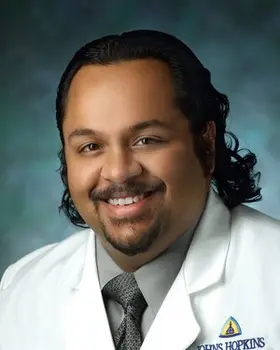
Dr. Ankur Butala specializes in the care of persons with complex neuropsychiatric conditions, including persons with advanced Parkinson Disease or other movement or neurodegenerative disorders. Upon graduating from a selective Physician-Scientist program at Albany Medical College, he joined the University of Massachusetts in an uncommon residency in both Neurology and Psychiatry. Dual-trained neuropsychiatrists such as Dr. Butala have experience with: Parkinson Disease and atypical Parkinsonism, Huntington Disease, Ataxia, Dystonia, early-onset dementia, traumatic brain injury and chronic traumatic encephalopathy, autism spectrum disorders, medication refractory mood and psychotic disorders, epilepsy and functional neurological disorders. In residency, he developed an interest in circuit models of brain function and how non-pharmacological approaches such as Neuromodulation and brain stimulation may be used to address treatment-resistant conditions. Consequently, he joined Johns Hopkins University School of Medicine as a Clinical and Research Fellow from 2015 to 2018, where he developed a skill set including deep brain stimulation, non-invasive brain stimulation (tDCS), and measurement of eye movements. Currently, Dr. Butala's clinical and research interests are in diagnosing and managing persons with advanced Parkinson's Disease, movement disorders, and neuropsychiatric conditions using neuromodulation, cannabinoids, and entheogens. He has ongoing multidisciplinary collaborations with colleagues at the Whiting School of Engineering - Center of Speech & Language Processing in using Machine-Learning Models and Artificial Intelligence to improve the detection and diagnosis of Movement and Neuropsychiatric disorders. LinkedIn https://www.linkedin.com/in/ankurbutalamd Videos Neurology: Junior Faculty Spotlight.
Dr. Butala is rated as an Experienced provider by MediFind in the treatment of Hereditary Hyperekplexia. His top areas of expertise are Parkinson's Disease, Corticobasal Degeneration, Movement Disorders, Drug Induced Dyskinesia, and Deep Brain Stimulation.
His clinical research consists of co-authoring 31 peer reviewed articles. MediFind looks at clinical research from the past 15 years. In particular, he has co-authored 1 article in the study of Hereditary Hyperekplexia.
Insurance
Accepted insurance can change. Please verify directly with the provider.
Accepted insurance plans:
- EPO
- HMO
- POS
- PPO
- EPO
- HMO
- POS
- PPO
- EPO
- HMO
- POS
- PPO
- INSURANCE PLAN
- MANAGED MEDICAID PLAN
- MEDICARE MAPD
- OTHER MEDICARE PART D
- PPO
- HMO
- POS
- PPO
- EPO
- HMO
- PPO
- MANAGED MEDICAID PLAN
- MEDICARE MAPD
- MEDICARE PDP
- MEDICARE SNP
- MEDICARE-MEDICAID PLAN
- INSURANCE PLAN
- MEDICARE PDP
- PPO
- HMO
- POS
- PPO
- EPO
- HMO
- PPO
- EPO
- POS
- HMO
- INDEMNITY
- POS
- PPO
- EPO
- POS
- PPO
- HMO
- MANAGED MEDICAID PLAN
- MEDICARE MAPD
- MEDICARE-MEDICAID PLAN
- HMO
- INSURANCE PLAN
- MANAGED MEDICAID PLAN
- MEDICARE MAPD
- MEDICARE PDP
- OTHER MEDICARE
- POS
- PPO
- OTHER MANAGED MEDICAID
- OTHER MEDICAID
- STATE MEDICAID
- INSURANCE PLAN
- MANAGED MEDICAID PLAN
- MEDICARE MAPD
- MEDICARE PDP
- MEDICARE SNP
- MEDICARE-MEDICAID PLAN
- OTHER MEDICARE PART D
- HMO
- MANAGED MEDICAID PLAN
- INSURANCE PLAN
- MANAGED MEDICAID PLAN
- MEDICARE ASSISTANCE PROGRAM
- MEDICARE MAPD
- MEDICARE SNP
- OTHER COMMERCIAL
- OTHER MEDICARE
- OTHER MEDICARE PART D
- EPO
- HMO
- POS
- PPO
- MEDICARE DISCOUNT CARD
- MEDICARE PDP
- OTHER MEDICARE
- EPO
- HMO
- INSURANCE PLAN
- MANAGED MEDICAID PLAN
- MEDICARE MAPD
- MEDICARE PDP
- MEDICARE SNP
- MEDICARE-MEDICAID PLAN
- OTHER MEDICARE
- OTHER MEDICARE PART D
Locations
601 North Caroline Street, Floor 5, Floor 5, Baltimore, MD 21287
10751 Falls Road, Falls Concourse STE 250, Lutherville, MD 21093
Additional Areas of Focus
Dr. Butala has provided the following conditions as areas of focus. Please note that we may not have enough data to validate their experience in some of these conditions.
Clinical Research
Clinical research consists of overseeing clinical studies of patients undergoing new treatments and therapies, and publishing articles in peer reviewed medical journals. Providers who actively participate in clinical research are generally at the forefront of the fields and aware of the most up-to-date advances in treatments for their patients.

Johns Hopkins Outpatient Center
Neurologist Scott Newsome specializes in the care of patients with neuroimmunological and neuroinflammatory disorders of the central nervous system. He works within the Division of Neuroimmunology and Neurological Infections at The Johns Hopkins Hospital, and has special interest in evaluating and treating patients with multiple sclerosis, transverse myelitis, neuromyelitis optica and stiff person syndrome. After completing fellowship training, Dr. Newsome joined the Johns Hopkins Multiple Sclerosis and Transverse Myelitis Centers, and he is the director of the Johns Hopkins Neurosciences Consultation and Infusion Center and the Stiff Person Syndrome Center. He is also director of the Johns Hopkins Neuroimmunology and Neurological Infectious Disease Fellowship Program and co-director of the Multiple Sclerosis Experimental Therapeutics Program. Dr. Newsome received his medical degree from the New York College of Osteopathic Medicine, with honors. During his neurology residency, he was awarded the Golden Apple Outstanding Resident Teaching Award, and later was chosen to be chief resident. He subsequently completed a fellowship in neuroimmunology at The Johns Hopkins Hospital with the support of a Sylvia Lawry Physician Fellowship Award from the National Multiple Sclerosis Society. Identifying and testing novel therapies and therapeutic strategies for multiple sclerosis and other neuroimmunological disorders is Dr. Newsome’s main research focus. Other research endeavors include validating the use of new quantitative clinical outcome measures and imaging techniques in multiple sclerosis and identifying risk factors of disease onset and severity, response to treatment and long-term outcomes in neuroimmunological disorders. An adviser for the National Multiple Sclerosis Society and a member of the Miller-Coulson Academy of Clinical Excellence, Dr. Newsome has also served as president of the Consortium of Multiple Sclerosis Centers. Dr. Newsome is rated as an Elite provider by MediFind in the treatment of Hereditary Hyperekplexia. His top areas of expertise are Stiff Person Syndrome, Multiple Sclerosis (MS), Transverse Myelitis, and Relapsing Multiple Sclerosis (RMS).
Olwen Murphy is a Neurologist in Baltimore, Maryland. Dr. Murphy is rated as an Advanced provider by MediFind in the treatment of Hereditary Hyperekplexia. Her top areas of expertise are Multiple Sclerosis (MS), Stiff Person Syndrome, Acute Flaccid Myelitis (AFM), and Optic Neuritis.

Johns Hopkins Outpatient Center
With fellowship training in neuro-ophthalmology and additional training in neuro-vestibular disorders, Dr. Daniel Gold sees patients with neuro-ophthalmic disorders (affecting vision, eyelids, pupils, or causing nystagmus or double vision) in addition to oto-neurologic disorders (causing dizziness and vertigo). Videos 2018 Best Consulting Physician Award Tele-(Dizzy) Medicine. Dr. Gold is rated as a Distinguished provider by MediFind in the treatment of Hereditary Hyperekplexia. His top areas of expertise are Vertigo, Benign Paroxysmal Positional Vertigo, Brown Syndrome, and Stiff Person Syndrome.
Areas of Expertise
MediFind evaluates expertise by pulling from factors such as number of articles a doctor has published in medical journals, participation in clinical trials, speaking at industry conferences, prescribing and referral patterns, and strength of connections with other experts in their field.
Learn more about MediFind’s expert tiers
- Distinguished
- Corticobasal DegenerationDr. Butala isDistinguished. Learn about Corticobasal Degeneration.
- Drug Induced DyskinesiaDr. Butala isDistinguished. Learn about Drug Induced Dyskinesia.
- Hereditary AtaxiaDr. Butala isDistinguished. Learn about Hereditary Ataxia.
- Movement DisordersDr. Butala isDistinguished. Learn about Movement Disorders.
- Parkinson's DiseaseDr. Butala isDistinguished. Learn about Parkinson's Disease.
- Advanced
- Aromatic L-Amino Acid Decarboxylase (AADC) Deficiency
- Boucher-Neuhauser SyndromeDr. Butala isAdvanced. Learn about Boucher-Neuhauser Syndrome.
- Cataract Ataxia DeafnessDr. Butala isAdvanced. Learn about Cataract Ataxia Deafness.
- Dentatorubral-Pallidoluysian Atrophy
- Dopa-Responsive DystoniaDr. Butala isAdvanced. Learn about Dopa-Responsive Dystonia.
- DysarthriaDr. Butala isAdvanced. Learn about Dysarthria.
- Experienced
- Acute Cerebellar AtaxiaDr. Butala isExperienced. Learn about Acute Cerebellar Ataxia.
- Alexander DiseaseDr. Butala isExperienced. Learn about Alexander Disease.
- Alzheimer's DiseaseDr. Butala isExperienced. Learn about Alzheimer's Disease.
- ApraxiaDr. Butala isExperienced. Learn about Apraxia.
- Benign Essential BlepharospasmDr. Butala isExperienced. Learn about Benign Essential Blepharospasm.
- Bipolar Disorder (BPD)Dr. Butala isExperienced. Learn about Bipolar Disorder (BPD).