The 20 Best Immune Thrombocytopenic Purpura (ITP) Doctors Near Me in Baltimore, MD
Find the Top Immune Thrombocytopenic Purpura (ITP) Experts and Specialists
The Center For Cancer & Blood Disorders
Dr. Ralph V. Boccia is a hematologist affiliated with Sibley Memorial Hospital, Suburban Hospital, Shady Grove Adventist Hospital, Holy Cross Hospital and MedStar Georgetown University Hospital, where he is a clinical associate professor of medicine for the University, as well as the medical director of the International Oncology Network (ION) Clinical Research Program and the chairman of ION’s Medical Advisory Panel. He practices out of the Center for Cancer and Blood Disorders, of which he is the founder and medical director, located in Bethesda, Maryland and Germantown, Maryland. Dr. Boccia earned his medical degree from the Autonomous University of Guadalajara School of Medicine. He completed a residency in internal medicine at Kern Medical Center, followed by a fellowship in hematology, oncology and bone marrow transplant at the combined UCLA-Veterans Administration Program and The National Cancer Institute at the National Institutes of Health. Dr. Boccia is a member of the American College of Physicians, the American Society of Clinical Oncology, the American Society of Hematology and the American Society for Blood and Marrow Transplantation. Dr. Boccia has been listed as a Top Doctor by Washingtonian Magazine and Consumers’ Checkbook Magazine since 1992. He has also been recognized as a Super Doctor by The Washington Post Magazine and a Regional Top Doctor for Washington, D.C., Baltimore and Washington-Baltimore by Castle Connolly. Dr. Boccia has contributed to various articles with his research, published in journals such as Annals of Internal Medicine, Journal of Clinical Oncology and The Lancet. Recent News Articles and Media Coverage Bladder cancer trends in Montgomery and Prince George's counties: Welcome news - and 3 facts you need to know. NJ.com (08/16/2016) RCCA Expands to Maryland to Become One of the Nation's First Multi-State Oncology/Hematology Physician-Owned and -Operated Networks. OncLive (10/06/2015). Dr. Boccia is rated as a Distinguished provider by MediFind in the treatment of Immune Thrombocytopenic Purpura (ITP). He is also highly rated in 25 other conditions, according to our data. His clinical expertise encompasses Anemia, Multiple Myeloma, Adult Immune Thrombocytopenia, Thrombocytopenia, and Splenectomy. Dr. Boccia is board certified in American Board Of Internal Medicine.

Maryland Oncology Hematology
As an active participant in the medical community, Mohit Narang, M.D. has served as a primary investigator and research assistant on many trials. During Dr. Narang’s fellowship, he was honored with the invitation to attend the Masterclass in Clinical Oncology at Montecatini, Italy by the European School of Oncology. He holds professional memberships with the American Society of Clinical Oncology, American Society of Hematology, as well as the European Society of Medical Oncology. Learn more at marylandoncology.com. Dr. Narang is rated as an Advanced provider by MediFind in the treatment of Immune Thrombocytopenic Purpura (ITP). He is also highly rated in 43 other conditions, according to our data. His clinical expertise encompasses Multiple Myeloma, Agranulocytosis, Paget Disease of the Breast, Thrombocytopenia, and Bone Marrow Transplant. Dr. Narang is board certified in American Board Of Internal Medicine.

Maryland Oncology Hematology
Edward Lee, M.D. was named one of Baltimore’s “Top Doc’s” by Baltimore Magazine in 2000 and 2002. After receiving additional training in Hematology and Medical Oncology at the University of Maryland in 1984, he remained on faculty until 1997. During his academic career, Dr. Lee was chairman of the training program for five years, started the Bone Marrow Transplant Program at the University of Maryland in 1993, and wrote 50 original articles on leukemia, lymphoma and related diseases. In 1997, Dr. Lee entered private practice as Chief of Hematology and Medical Oncology at Sinai Hospital. Practicing in Columbia since 2001, Dr. Lee treats patients with all forms of cancer, maintaining a particular interest in breast cancer, leukemia, and lymphomas. Learn more at marylandoncology.com. Dr. Lee is rated as an Advanced provider by MediFind in the treatment of Immune Thrombocytopenic Purpura (ITP). He is also highly rated in 42 other conditions, according to our data. His clinical expertise encompasses Polycythemia Vera, Paget Disease of the Breast, Breast Cancer, and Primary Lymphoma of the Brain. Dr. Lee is board certified in American Board Of Internal Medicine.

Skip Viragh Outpatient Cancer Center
William Houck is an Oncologist practicing medicine in Baltimore, Maryland. Dr. Houck is rated as an Advanced provider by MediFind in the treatment of Immune Thrombocytopenic Purpura (ITP). He is also highly rated in 73 other conditions, according to our data. His clinical expertise encompasses Paget Disease of the Breast, Lung Cancer, Chronic Lymphocytic Leukemia (CLL), and Chronic B-Cell Leukemia (CBCL). Dr. Houck is board certified in American Board Of Internal Medicine.

Maryland Oncology Hematology
Andrew Mener, M.D. has experience treating a wide range of adult hematologic and oncologic disorders, with a particular interest in treating breast, lung, gastrointestinal and hematologic malignancies. He takes great pride in delivering personalized, compassionate care and strives to effectively explain complex treatment options to his patients. He strongly believes in the importance of treating each and every patient as an individual. Learn more at marylandoncology.com. Dr. Mener is rated as an Advanced provider by MediFind in the treatment of Immune Thrombocytopenic Purpura (ITP). He is also highly rated in 48 other conditions, according to our data. His clinical expertise encompasses Breast Cancer, Paget Disease of the Breast, Iron Deficiency Anemia, and Severe Congenital Neutropenia. Dr. Mener is board certified in American Board Of Internal Medicine.

Maryland Oncology Hematology PA
"Shannon C. O'Connor, M.D., is a medical oncologist with Suburban Hospital. She practices out of Maryland Oncology Hematology. Dr. O'Connor has expertise in hematology and medical oncology with a special focus in women's health, including breast cancer and gynecologic cancers. Dr. O'Connor earned her Master's Degree in Physiology at Georgetown University, followed by her medical degree from St. George's University School of Medicine. She completed a residency at Washington Hospital Center, as well as a fellowship in hematology and oncology. Dr. O'Connor is a member of the American Society of Clinical Oncology, the American Society of Hematology, the Montgomery County Medical Society and the American Medical Association. Selected Publications Catlett JP1, Williams SA, O'Connor SC, Krishnan J, Malkovska V. ""Primary lymphoma of bone: an institutional experience."" Leuk Lymphoma. 2008 Nov;49(11):2125-32. doi: 10.1080/10428190802404030.". Dr. O'connor is rated as an Advanced provider by MediFind in the treatment of Immune Thrombocytopenic Purpura (ITP). She is also highly rated in 46 other conditions, according to our data. Her clinical expertise encompasses Paget Disease of the Breast, Neuroendocrine Carcinoma of the Cervix, Cervical Cancer, and Breast Cancer. Dr. O'connor is board certified in American Board Of Internal Medicine.
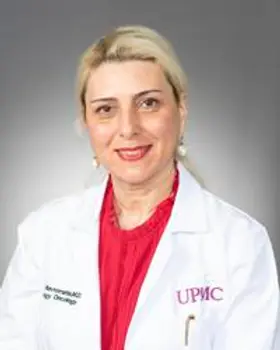
UPMC Hillman Cancer Center At UPMC Western Maryland
Blanche Mavromatis, MD, specializes in hematology oncology and is board certified in internal medicine by the American Board of Internal Medicine. Dr. Mavromatis completed her fellowship at Georgetown University Hospital, residency at Georgetown University Medical Center and medical degree from Thomas Jefferson University Medical College. Dr. Mavromatis is rated as an Advanced provider by MediFind in the treatment of Immune Thrombocytopenic Purpura (ITP). She is also highly rated in 67 other conditions, according to our data. Her clinical expertise encompasses Breast Cancer, Paget Disease of the Breast, Chronic Lymphocytic Leukemia (CLL), and Richter Syndrome. Dr. Mavromatis is board certified in American Board Of Internal Medicine. Dr. Mavromatis is currently accepting new patients.

The Johns Hopkins Hospital
Dr. Rakhi P. Naik is the Associate Director for the Division of Hematology at Johns Hopkins University. She also serves as Director of the Fellowship Hematology Track and Director of Organ Systems Foundation of Medicine (OSFM), the largest pre-clerkship course in the medical school. She holds an undergraduate degree in Biomedical & Electrical Engineering from Duke University, an M.D. with. Dr. Naik is rated as an Advanced provider by MediFind in the treatment of Immune Thrombocytopenic Purpura (ITP). She is also highly rated in 17 other conditions, according to our data. Her clinical expertise encompasses Sickle Cell Disease, Congenital Hemolytic Anemia, Hemolytic Anemia, and Hemoglobinopathy. Dr. Naik is board certified in American Board Of Internal Medicine.
Bay Hematology Oncology P.A.
David Smith is a Hematologist practicing medicine in Centreville, Maryland. Dr. Smith is rated as a Distinguished provider by MediFind in the treatment of Immune Thrombocytopenic Purpura (ITP). He is also highly rated in 113 other conditions, according to our data. His clinical expertise encompasses Thrombocytopenia, Hemangioma Thrombocytopenia Syndrome, Adult Immune Thrombocytopenia, and Myelodysplastic Syndrome (MDS).
UPMC Primary Care
Sunil Gupta, MD, specializes in internal medicine and is board certified in internal medicine by the American Board of Internal Medicine. He practices at UPMC Primary Care at the UPMC Johnson Heights Medical Building. Dr. Gupta completed his medical education at Government Medical College and residency at VA Medical Center - Wilkes Barre. Dr. Gupta is rated as an Advanced provider by MediFind in the treatment of Immune Thrombocytopenic Purpura (ITP). He is also highly rated in 44 other conditions, according to our data. His clinical expertise encompasses Hypertension, Familial Hypertension, Glucocorticoid-Remediable Aldosteronism, Craniectomy, and Endovascular Embolization. Dr. Gupta is board certified in American Board Of Internal Medicine. Dr. Gupta is currently accepting new patients.
Maryland Oncology Hematology PA
"Dr. Ari D. Fishman is a hematologist affiliated with Sibley Memorial Hospital, Holy Cross Hospital and George Washington University Hospital, where he serves as an assistant professor of medicine for the School of Medicine. He practices out of Maryland Oncology and Hematology, located in Wheaton, Maryland and Silver Spring, Maryland. Dr. Fishman earned his medical degree from Sackler School of Medicine. He completed a residency in internal medicine at the Beth Israel Medical Center, followed by a fellowship in hematology and oncology at the Montefiore Medical Center. Dr. Fishman previously worked at Washington Oncology Hematology Center, located in Washington, D.C. and Chevy Chase, Maryland. Dr. Fishman has been named a Top Doctor in Hematology and Oncology by Washingtonian Magazine and a Top Doctor by Consumers’ Checkbook magazine. Dr. Fishman is a member of the American College of Physicians and the American Society of Clinical Oncology. Dr. Fishman has contributed to numerous publications. Selected Publications Fishman AD, Hoffman A, Volterra F, Frymus M, Gentilluci M. ""Intracaval and intracardiac metastatic nonseminomatous germ cell tumor: a rare cause of hemolytic anemia and thrombocytopenia."" Cancer Invest. 2002;20(7-8):996-1001.". Dr. Fishman is rated as an Advanced provider by MediFind in the treatment of Immune Thrombocytopenic Purpura (ITP). He is also highly rated in 55 other conditions, according to our data. His clinical expertise encompasses Schnitzler Syndrome, Monoclonal Gammopathy of Undetermined Significance (MGUS), Myelodysplastic Syndrome (MDS), and Childhood Iron Deficiency Anemia. Dr. Fishman is board certified in American Board Of Internal Medicine.

Center For Cancer & Blood Disorders
Mark Goldstein is a Hematologist Oncology provider practicing medicine in Bethesda, Maryland. Dr. Goldstein is rated as an Experienced provider by MediFind in the treatment of Immune Thrombocytopenic Purpura (ITP). He is also highly rated in 30 other conditions, according to our data. His clinical expertise encompasses Childhood Iron Deficiency Anemia, Anal Cancer, Myelodysplastic Syndrome (MDS), and Pleuropulmonary Blastoma. Dr. Goldstein is board certified in American Board Of Internal Medicine.

Sidney Kimmel Comprehensive Cancer Center
Dr. Robert Brodsky is a professor of medicine at the Johns Hopkins University School of Medicine. His area of clinical expertise is classical hematology and haploidentical bone marrow transplant for sickle cell disease and aplastic anemia. Dr. Brodsky serves as the director of the Division of Hematology and the T32 Training Program. He is the Johns Hopkins Family Professor of Medicine and Oncology. He received his M.D. from Hahnemann University. He completed his residency at the Vanderbilt University School of Medicine. He performed a fellowship in hematology at the National Institutes of Health and a fellowship in oncology at Johns Hopkins. He joined the Johns Hopkins faculty in 1997. From 2017 to 2022 he served as Associate Editor to The Journal of Clinical Investigation (JCI) and Secretary to American Society of Hematology (ASH). He serves as President of The American Society of Hematology (ASH) in 2023. Dr. Brodsky is rated as an Experienced provider by MediFind in the treatment of Immune Thrombocytopenic Purpura (ITP). He is also highly rated in 29 other conditions, according to our data. His clinical expertise encompasses Paroxysmal Nocturnal Hemoglobinuria (PNH), Paroxysmal Cold Hemoglobinuria, Anemia, Bone Marrow Transplant, and Splenectomy. Dr. Brodsky is board certified in American Board Of Internal Medicine.

Chesapeake Oncology Hematology Assoc
Gayatri Nimmagadda is a Hematologist and a Hematologist Oncology provider practicing medicine in Columbia, Maryland. Dr. Nimmagadda is rated as an Experienced provider by MediFind in the treatment of Immune Thrombocytopenic Purpura (ITP). She is also highly rated in 14 other conditions, according to our data. Her clinical expertise encompasses Breast Cancer, Paget Disease of the Breast, Iron Deficiency Anemia, and Pleuropulmonary Blastoma. Dr. Nimmagadda is board certified in American Board Of Internal Medicine.

Sidney Kimmel Comprehensive Cancer Center
Dr. Lode J. Swinnen is a cancer specialist in Baltimore caring for patients with lymphoma. Dr. Swinnen received his M.B.Ch.B. degree from the University of Cape Town Medical School. He completed his residency at Presence Saint Joseph Hospital and performed a fellowship in hematology-oncology at Loyola University Stritch School of Medicine. Dr. Swinnen joined the Johns Hopkins faculty in 2002. His research interests include lymphomas and immunodeficiency-associated malignancies. Dr. Swinnen is a member of the Eastern Cooperative Oncology Group and the National Comprehensive Cancer Network. Dr. Swinnen is rated as an Experienced provider by MediFind in the treatment of Immune Thrombocytopenic Purpura (ITP). He is also highly rated in 33 other conditions, according to our data. His clinical expertise encompasses Non-Hodgkin Lymphoma, Diffuse Large B-Cell Lymphoma (DLBCL), Small Lymphocytic Lymphoma (SLL), Chronic Lymphocytic Leukemia (CLL), and Bone Marrow Transplant. Dr. Swinnen is board certified in American Board Of Internal Medicine.

Chesapeake OncologyHematology
Arun Bhandari, M.D. is a native of Maryland and grew up in Silver Spring area. He earned his medical degree from Punjabi University and Government Medical College, Punjab, India and completed his internship and residency in Internal Medicine at New York University program in Queens, NY. He completed his Hematology and Oncology fellowship at University of Tennessee Health Science Center, Memphis, TN, Georgetown University and Washington Hospital Center, Washington, DC and NHLBI at National Institute of Health, Bethesda, MD. He served as a chief fellow at Georgetown University and Washington Hospital Center, Washington, D.C. After completing his fellowship in 2005, he joined as faculty at Allegheny General Hospital in Pittsburgh, PA, where he was actively involved in teaching fellows and residents. He joined COHA in 2007 at which time he opened a location in Annapolis and Kent Island. He has interest in head and neck cancer, brain cancer, breast cancer, lung cancer, gastrointestinal cancer(colon, pancreas, liver, gastric, esophageal etc.), genitourinary cancer (kidney, prostate, bladder etc.), gynecological cancer (ovarian, uterine, cervical, vaginal etc.), skin cancer, Lymphoma, Myeloma, Leukemia and various other blood disorders. He is a member of the American Society of Clinical Oncology and American Society of Hematology. He currently sees patients at Annapolis Cancer Center and Kent Island Center. He speaks English, Hindi, and Punjabi. Dr. Bhandari is rated as an Experienced provider by MediFind in the treatment of Immune Thrombocytopenic Purpura (ITP). He is also highly rated in 12 other conditions, according to our data. His clinical expertise encompasses Pleuropulmonary Blastoma, Multiple Myeloma, Iron Deficiency Anemia, and Childhood Iron Deficiency Anemia. Dr. Bhandari is board certified in American Board Of Internal Medicine.

Rubenstein Child Health Building
Dr. Matthew Merguerian is a pediatric hematologist specializing in bleeding and clotting disorders. His research is focused on bleeding disorders resulting from platelet dysfunction. His lab is interested in understanding the mechanisms behind platelet dysfunction and in developing platelet-targeted therapies that could alleviate abnormal bleeding or clotting. Dr. Merguerian is rated as an Experienced provider by MediFind in the treatment of Immune Thrombocytopenic Purpura (ITP). His clinical expertise encompasses Blood Clots, Leukemia, and Immune Thrombocytopenic Purpura (ITP). Dr. Merguerian is board certified in American Board Of Pediatrics.

Johns Hopkins Children's Center
Dr. Friedman is the King Fahd Professor of Oncology and Professor of Pediatrics at the Johns Hopkins University School of Medicine and a member of the Johns Hopkins Kimmel Cancer Center. He received his M.D. from the Harvard Medical School (1983), did his pediatric internship and residency at Boston Children's Hospital (1983-86), and completed a fellowship in pediatric hematology-oncology at Johns Hopkins (1986-89). As a fellow, he did post-doctoral research at the Carnegie Institution Department of Embryology located on the Johns Hopkins Homewood campus. Dr. Friedman has served on the Pediatric Oncology faculty at Johns Hopkins since 1989. His laboratory focuses on investigation of normal and abnormal blood-cell formation. Dr. Friedman also cares for children with cancer, specializing in the treatment of leukemia. Dr. Friedman is rated as undefined provider by MediFind in the treatment of Immune Thrombocytopenic Purpura (ITP). His clinical expertise encompasses Glioma, Leukemia, Acute Lymphoblastic Leukemia (ALL), and Neuroblastoma. Dr. Friedman is board certified in American Board Of Pediatrics.

Johns Hopkins Children's Center
Dr. Kathryn Lemberg is an Assistant Professor of Oncology and Pediatrics at the Sidney Kimmel Comprehensive Cancer Center. Her research, conducted with Johns Hopkins Drug Discovery, focuses on tumor metabolism and the development of new metabolic inhibitors to treat cancer. She has investigated novel glutamine antagonists in preclinical models of RAS-driven solid tumors. She is also interested in the effects of tumor metabolism on patient growth and development. Dr. Lemberg completed pediatrics residency training at Johns Hopkins and pediatric hematology-oncology fellowship training in the joint Johns Hopkins/National Cancer Institute program. She received her M.D. and Ph.D. degrees from the Medical Scientist Training Program at Columbia University in New York, where her graduate research focused on ferroptosis, a novel oxidative cell death in cancer models. Dr. Lemberg sees pediatric and young adult sarcoma patients as part of the sarcoma team and has additional clinical focus on neurofibromatosis type I related solid tumors. Dr. Lemberg is rated as undefined provider by MediFind in the treatment of Immune Thrombocytopenic Purpura (ITP). She is also highly rated in 2 other conditions, according to our data. Her clinical expertise encompasses Malignant Peripheral Nerve Sheath Tumor, Neurofibromatosis Type 1 (NF1), Neurofibromatosis, and Adult Soft Tissue Sarcoma. Dr. Lemberg is board certified in American Board Of Pediatrics.

Johns Hopkins Children's Center
Dr. Stacy Cooper is the Director of the Pediatric Hematologic Malignancy Program, Director of the Pediatric Hematology/Oncology Fellowship Program, and Clinical Director of the Pediatric Oncology Inpatient Program at the Johns Hopkins School of Medicine. Dr. Cooper received her undergraduate degree in Biology and Spanish at the University of Notre Dame. She earned her M.D. at SUNY Upstate Medical University. She completed her general pediatric residency and chief residency at the Johns Hopkins School of Medicine. She completed her pediatric hematology-oncology fellowship with the Johns Hopkins-National Institutes of Health. Dr. Cooper joined the Johns Hopkins faculty in 2015. Her research focuses on clinical research in acute lymphoblastic leukemia, as well as medical education scholarship related to fellowship training. Dr. Cooper is a member of the American Board of Pediatrics, the American Society of Hematology, the American Society of Pediatric Hematology Oncology and the Association of Pediatric Program Directors. Dr. Cooper is rated as undefined provider by MediFind in the treatment of Immune Thrombocytopenic Purpura (ITP). She is also highly rated in 3 other conditions, according to our data. Her clinical expertise encompasses Classical Hodgkin Lymphoma, Hodgkin Lymphoma, Acute Lymphoblastic Leukemia (ALL), and Leukemia. Dr. Cooper is board certified in American Board Of Pediatrics.
Last Updated: 06/30/2026