Overview
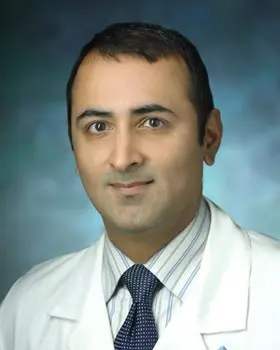
Dr. Haris Sair is Professor in the Johns Hopkins Medicine Department of Radiology and Radiological Science, and the Director of the Division of Neuroradiology. His areas of clinical expertise include functional Magnetic Resonance Imaging (fMRI) of the brain. He also has a faculty appointment in the Malone Center for Engineering in Healthcare at The Whiting School of Engineering, Johns Hopkins University, investigating the use of machine learning and artificial intelligence in imaging. He is a founding director of the Radiology Artificial Intelligence Lab (RAIL). He previously served as the President of the American Society of Functional Neuroradiology. Dr. Sair earned his M.D. from Duke University School of Medicine. He completed his Radiology residency at Temple University Medical Center, and fellowship in Neuroradiology at Massachusetts General Hospital in Boston, MA.
Dr. Sair is rated as an Experienced provider by MediFind in the treatment of Neurofibromatosis Type 1 (NF1). His top areas of expertise are Hydrocephalus, Normal Pressure Hydrocephalus, Traumatic Brain Injury, Cerebrospinal Fluid Leak, and Microvascular Decompression.
His clinical research consists of co-authoring 147 peer reviewed articles. MediFind looks at clinical research from the past 15 years.
Insurance
Accepted insurance can change. Please verify directly with the provider.
Accepted insurance plans:
- EPO
- HMO
- POS
- PPO
- HMO
- POS
- PPO
- EPO
- HMO
- PPO
- INSURANCE PLAN
- MEDICARE PDP
- PPO
- HMO
- POS
- PPO
- INSURANCE PLAN
- MANAGED MEDICAID PLAN
- MEDICARE MAPD
- MEDICARE PDP
- MEDICARE SNP
- MEDICARE-MEDICAID PLAN
- OTHER MEDICARE PART D
Locations
Baltimore, MD 21287
Additional Areas of Focus
Dr. Sair has provided the following conditions as areas of focus. Please note that we may not have enough data to validate their experience in some of these conditions.
Clinical Research
Clinical research consists of overseeing clinical studies of patients undergoing new treatments and therapies, and publishing articles in peer reviewed medical journals. Providers who actively participate in clinical research are generally at the forefront of the fields and aware of the most up-to-date advances in treatments for their patients.
The Johns Hopkins Hospital
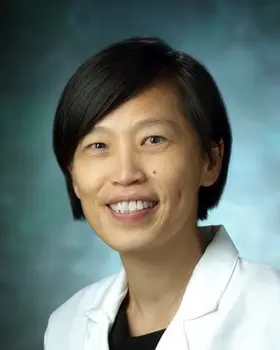
Dr. Doris Da May Lin is an Associate Professor in the Johns Hopkins Medicine Department of Radiology and Radiological Science. She specializes in neuroradiology. Dr. Lin received her B.A. in chemistry from the University of Pennsylvania, and then pursued a joint M.D./Ph.D. degree at the Yale University School of Medicine, with graduate training in the neurosciences. She completed a medical internship at the University of Pennsylvania Hospital and a diagnostic radiology residency at New York Presbyterian Hospital-Cornell. After a two-year neuroradiology fellowship, she joined the faculty at Johns Hopkins. Dr. Lin is rated as an Advanced provider by MediFind in the treatment of Neurofibromatosis Type 1 (NF1). Her top areas of expertise are Parkes Weber Syndrome, Sturge-Weber Syndrome, Subdural Effusion, CACH Syndrome, and Endovascular Embolization.

The Johns Hopkins Hospital
Dr. Jenny Hoang is a Professor of Radiology at Johns Hopkins Medicine where she is the Chair of Bayview Radiology. Dr. Hoang earned her M.B.B.S. from the University of Melbourne, completed diagnostic radiology residency at St. Vincent’s Hospital in Melbourne, Australia, and completed fellowships in neuroradiology and cardiothoracic radiology at Duke University Medical Center. Dr. Hoang is a lifelong learner - she graduated with a Masters in Health Science from Duke University. In December 2019 she completed an executive MBA class at the Duke Fuqua School of Business and graduated in the top 10% of her class (Fuqua Scholar). Her career is accentuated by her strong involvement in research and education. She has published more than 110 peer-reviewed articles with a focus on thyroid and parathyroid imaging. She led the American College of Radiology (ACR) efforts in producing a White Paper on Incidental Thyroid Findings and was a core member of the ACR TI-RADS committee for thyroid ultrasound. She serves on several ACR committees including the Incidental Findings Committee. Dr. Hoang is the principal investigator for an ACRIN funded study using ACR's Multicenter Thyroid Ultrasound Registry. She is a popular a faculty lecturer at national and international meetings. She is also well known for actively educating and advocating on Twitter as @JennyKHoang. LinkedIn https://www.linkedin.com/in/JKHoang. Dr. Hoang is rated as an Advanced provider by MediFind in the treatment of Neurofibromatosis Type 1 (NF1). Her top areas of expertise are Hydrocephalus, Meningioma, Normal Pressure Hydrocephalus, and Congenital Cardiovascular Shunt.
The Johns Hopkins Hospital
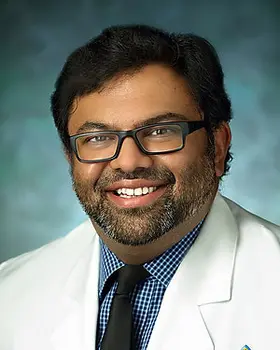
Dr. Vivek Srikar Yedavalli is currently an Associate Professor of Radiology and Radiological Science, Associate Professor of Neurology, the Director of Stroke, Neurovascular, and Perfusion Imaging at Johns Hopkins Hospital, Chief of Neuroradiology at Johns Hopkins Bayview Medical Center, and Assistant Director of the Department of Radiology Physician Scientist Incubator Program. Dr. Yedavalli has been recognized nationally as a translational stroke and perfusion imaging researcher and physician-scientist. Within one year of his appointment at Johns Hopkins, Dr. Yedavalli received the Radiological Society of North America (RSNA)’s Seed Grant using MRI spectroscopy for prognostication in subacute ischemic stroke. Dr. Yedavalli was then chosen as the inaugural recipient of the Johns Hopkins University Department of Radiology Physician Scientist Incubator Program (RAD-PSI), an internal grant that also confers funding and protected time for his stroke work. The following year, for applying his work on collateralization based on CT perfusion within acute ischemic stroke with artificial intelligence, Dr. Yedavalli was awarded the RSNA Scholar Grant. For his research endeavors, Dr. Yedavalli was previously chosen as the American Journal of Neuroradiology (AJNR) Editorial Fellow and then subsequently as a member of the Academy of Radiology and Biomedical Imaging Research’s Council of Early Career Investigators. Thereafter, for his novel translational applications of MRI perfusion techniques to stroke, Dr. Yedavalli was chosen as a Junior Fellow of the International Society of Magnetic Resonance Imaging in Medicine (ISMRM). Dr. Yedavalli became an Editorial Board member of Stroke and an Editor in Training for Stroke: Vascular and Interventional Neurology. For his research endeavors, Dr. Yedavalli was conferred the Junior Faculty Clinical Research Award in 2023. In addition to research, Dr. Yedavalli is an active member of a number of national committees with a strong interest in leadership. He is currently a member of the ASNR Research, Education, Social Media/Website, and Young Professionals Committees. He also served as the Co-Chair of the Social Media Committee for the ASFNR 2019. Previously, Dr. Yedavalli was an Illinois ACR RFS Delegate in 2017 and 2018. He will also be the ASNR’s AMA Representative at this upcoming meeting. Dr. Yedavalli’s interests additionally include educational and teaching endeavors. He was previously the recipient of the Department of Radiology Education Award during his residency training. He prefers a balanced teaching approach with trainees with focused learning while maintaining autonomy for a more productive learning environment. Dr. Yedavalli is rated as a Distinguished provider by MediFind in the treatment of Neurofibromatosis Type 1 (NF1). His top areas of expertise are Arteriovenous Malformation, Moyamoya Disease, Brain Aneurysm, Thrombectomy, and Rhizotomy.
Areas of Expertise
MediFind evaluates expertise by pulling from factors such as number of articles a doctor has published in medical journals, participation in clinical trials, speaking at industry conferences, prescribing and referral patterns, and strength of connections with other experts in their field.
Learn more about MediFind’s expert tiers
- Distinguished
- HydrocephalusDr. Sair isDistinguished. Learn about Hydrocephalus.
- Normal Pressure HydrocephalusDr. Sair isDistinguished. Learn about Normal Pressure Hydrocephalus.
- Advanced
- Brain AneurysmDr. Sair isAdvanced. Learn about Brain Aneurysm.
- Cerebellar DegenerationDr. Sair isAdvanced. Learn about Cerebellar Degeneration.
- Cerebrospinal Fluid LeakDr. Sair isAdvanced. Learn about Cerebrospinal Fluid Leak.
- Congenital Cardiovascular Shunt
- MeningiomaDr. Sair isAdvanced. Learn about Meningioma.
- Pediatric Low-Grade Glioma (pLGG)
- Experienced
- Acute Lymphoblastic Leukemia (ALL)Dr. Sair isExperienced. Learn about Acute Lymphoblastic Leukemia (ALL).
- ALK-Positive Non-Small Cell Lung Cancer
- Arachnoid CystsDr. Sair isExperienced. Learn about Arachnoid Cysts.
- Aseptic and Alopecic Nodules of Scalp (AANS)
- CAPOS SyndromeDr. Sair isExperienced. Learn about CAPOS Syndrome.
- Cerebellar Multiple System AtrophyDr. Sair isExperienced. Learn about Cerebellar Multiple System Atrophy.