
Overview
Brenda Banwell is the director of the Department of Pediatrics, as well as pediatrician-in-chief and co-director of Johns Hopkins Children’s Center, where she helps manage the hospital’s many clinical and research centers. Dr. Banwell is a renowned expert in the research and treatment of pediatric multiple sclerosis (MS) and other neuroimmune disorders. She specializes in and studies the use of neuroimaging to assess the clinical and cognitive impact of the conditions, as well as the function of the immune system in children with these disorders. She also created a standardized clinical care algorithm and clinical database in order to evaluate the clinical impact of MS. Dr. Banwell has published more than 250 manuscripts in high-impact journals, along with over 25 book chapters. In addition, she has over 200 national and international invited lectureships and visiting professorships. An advocate for pediatric multiple sclerosis needs and research, Dr. Banwell serves as chair of the International Medical and Scientific Board of the Multiple Sclerosis International Federation, and the Myelin Oligodendrocyte Glycoprotein Antibody–Associated Disease (MOGAD) International Research Consortium. She is also chair of the pediatric committee of the National Institutes of Health NeuroNEXT program, which conducts studies on treatments for neurological diseases through academic, private, and industry collaborations. Dr. Banwell currently serves as past-chair of the International Pediatric Multiple Sclerosis Study Group, Dr. Banwell earned her medical degree from the University of Western Ontario. She later completed a residency in pediatrics at the University of Western Ontario-Children's Hospital of Western Ontario and a second residency in pediatric neurology at University of Toronto – The Hospital for Sick Children. Her residencies were followed by a fellowship in neuromuscular research at Mayo Clinic.
Dr. Banwell is rated as an Advanced provider by MediFind in the treatment of Polymicrogyria. Her top areas of expertise are Multiple Sclerosis (MS), CACH Syndrome, Optic Neuritis, and Transverse Myelitis.
Her clinical research consists of co-authoring 304 peer reviewed articles and participating in 1 clinical trial. MediFind looks at clinical research from the past 15 years.
Insurance
Accepted insurance can change. Please verify directly with the provider.
Accepted insurance plans:
- EPO
- HMO
- POS
- PPO
- EPO
- HMO
- POS
- PPO
- HMO
- POS
- PPO
- HMO
- POS
- PPO
- INSURANCE PLAN
- MANAGED MEDICAID PLAN
- MEDICARE MAPD
- MEDICARE SNP
- EPO
- HMO
- PPO
- EPO
- POS
- HMO
- INDEMNITY
- POS
- PPO
- EPO
- POS
- PPO
- OTHER MEDICAID
- STATE MEDICAID
- INSURANCE PLAN
- MANAGED MEDICAID PLAN
- MEDICARE MAPD
- MEDICARE PDP
- MEDICARE SNP
- MEDICARE-MEDICAID PLAN
- OTHER MEDICARE PART D
- EPO
- HMO
- POS
- PPO
- EPO
- HMO
- INSURANCE PLAN
- MANAGED MEDICAID PLAN
- MEDICARE MAPD
- MEDICARE PDP
- MEDICARE SNP
- MEDICARE-MEDICAID PLAN
- OTHER MEDICARE
- OTHER MEDICARE PART D
Locations
601 North Caroline Street, Floor 5, Floor 5, Baltimore, MD 21287
Clinical Research
Clinical research consists of overseeing clinical studies of patients undergoing new treatments and therapies, and publishing articles in peer reviewed medical journals. Providers who actively participate in clinical research are generally at the forefront of the fields and aware of the most up-to-date advances in treatments for their patients.
1 Clinical Trials
Michel Fayad is a Pediatric Neurologist and a Neurologist in Washington, Washington, D.c.. Dr. Fayad is rated as an Advanced provider by MediFind in the treatment of Polymicrogyria. His top areas of expertise are Infant Epilepsy with Migrant Focal Crisis, Epilepsy in Children, Epilepsy with Myoclonic-Atonic Seizures, and West Syndrome.
University Of Maryland Pediatric Associates, PA
Stephen Thompson is a Pediatric Neurologist and a Pediatrics provider in Baltimore, Maryland. Dr. Thompson is rated as an Advanced provider by MediFind in the treatment of Polymicrogyria. His top areas of expertise are Migraine with Brainstem Aura, Migraine, Seizures, and Generalized Tonic-Clonic Seizure.
Johns Hopkins Outpatient Center
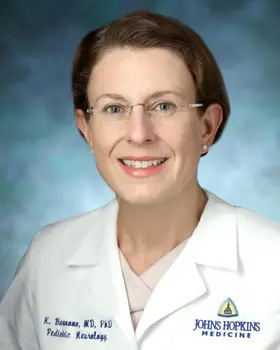
Dr. Barañano earned her M.D. and Ph.D. degrees from the Johns Hopkins University School of Medicine, where she also completed residencies in pediatrics and neurology, along with a fellowship in neurogenetics at the Kennedy Krieger Institute. Dr. Barañano is an Associate Professor of Clinical Neurology. She specializes in the diagnosis and management of rare neurogenetic disorders. She has a particular interest in the genetic control and function of the cerebellum and expertise in childhood-onset and inherited ataxias. She is a member of the multidisciplinary Fetal Management group and is available for prenatal consultations. Dr. Barañano's research includes collaborative efforts with the Johns Hopkins Department of Genetic Medicine and the Division of Neurogenetics at the Kennedy Krieger Institute. Dr. Baranano is rated as a Distinguished provider by MediFind in the treatment of Polymicrogyria. Her top areas of expertise are Hypotonia, Ohdo Syndrome, Say-Barber-Biesecker-Young-Simpson Variant, Focal or Multifocal Malformations in Neuronal Migration, and Hereditary Ataxia.
Areas of Expertise
MediFind evaluates expertise by pulling from factors such as number of articles a doctor has published in medical journals, participation in clinical trials, speaking at industry conferences, prescribing and referral patterns, and strength of connections with other experts in their field.
Learn more about MediFind’s expert tiers
- Elite
- Multiple Sclerosis (MS)Dr. Banwell isElite. Learn about Multiple Sclerosis (MS).
- Distinguished
- CACH SyndromeDr. Banwell isDistinguished. Learn about CACH Syndrome.
- Myelin Oligodendrocyte Glycoprotein Antibody-Associated Disease
- Neuromyelitis OpticaDr. Banwell isDistinguished. Learn about Neuromyelitis Optica.
- Optic NeuritisDr. Banwell isDistinguished. Learn about Optic Neuritis.
- Relapsing Multiple Sclerosis (RMS)Dr. Banwell isDistinguished. Learn about Relapsing Multiple Sclerosis (RMS).
- Transverse MyelitisDr. Banwell isDistinguished. Learn about Transverse Myelitis.
- Advanced
- Acute Flaccid Myelitis (AFM)Dr. Banwell isAdvanced. Learn about Acute Flaccid Myelitis (AFM).
- Agyria Pachygyria PolymicrogyriaDr. Banwell isAdvanced. Learn about Agyria Pachygyria Polymicrogyria.
- Anti-NMDA Receptor EncephalitisDr. Banwell isAdvanced. Learn about Anti-NMDA Receptor Encephalitis.
- EncephalitisDr. Banwell isAdvanced. Learn about Encephalitis.
- Focal or Multifocal Malformations in Neuronal Migration
- HiccupsDr. Banwell isAdvanced. Learn about Hiccups.
- Experienced
- Absence SeizureDr. Banwell isExperienced. Learn about Absence Seizure.
- ApraxiaDr. Banwell isExperienced. Learn about Apraxia.
- Brain HerniationDr. Banwell isExperienced. Learn about Brain Herniation.
- Cerebellum Agenesis HydrocephalyDr. Banwell isExperienced. Learn about Cerebellum Agenesis Hydrocephaly.
- Cerebral HypoxiaDr. Banwell isExperienced. Learn about Cerebral Hypoxia.
- Childhood PancreatitisDr. Banwell isExperienced. Learn about Childhood Pancreatitis.