Overview
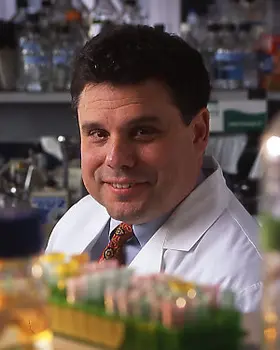
Richard F. Ambinder, M.D., Ph.D., currently serves as the James B. Murphy Professor of Oncology and the Director of the Division of Hematologic Malignancies at the Johns Hopkins Kimmel Cancer Center. He is program co-leader of the Hematologic Malignancies and Bone Marrow Transplantation Program and leads the AIDS Malignancy Consortium (AMC) site at Johns Hopkins and the AMC Translational Sciences Working Group nationally. Dr. Ambinder graduated from Harvard College with a Bachelor’s degree in biochemistry, after which he received his medical degree from the Johns Hopkins University School of Medicine before completing his residency at the Johns Hopkins Hospital. He also earned his Ph.D. in pharmacology from the Johns Hopkins University, and completed his oncology fellowship at Johns Hopkins. Within the clinic, Dr. Ambinder is active in the treatment of lymphoma and Kaposi’s sarcoma. Dr. Ambinder’s research is focused on exploring opportunities to prevent or treat cancer with viral infections. Virus-associated tumors are among the most common malignancies in certain populations and regions. For instance, Burkitt's lymphoma (EBV) and Kaposi's sarcoma (KSHV) are common in equatorial Africa, nasopharyngeal carcinoma (EBV) is common in southern Chinese populations or those with southern Chinese origins, and immunoblastic lymphomas (EBV) are common in immunocompromised patients (organ transplant recipients, AIDS patients, etc). Thus, Dr. Ambinder’s new approaches to prevention, diagnosis, and treatment stand to have a direct impact on the lives of cancer patients around the globe. Additionally, the study of how viruses can impact these tumors is important in creating model systems for the development of new approaches to cancer care. Currently, many immunotherapies target unidentified antigens, making the measurement of relevant immune responses problematic at best. However, in EBV-associated tumors the antigens are well defined, thus allowing the Ambinder lab to define the epitope-specific cellular immune responses. As a result of this breakthrough, interventions designed to alter immune response —whether they be vaccine based interventions, adoptive immunotherapy interventions, or pharmacologic interventions — may all be assessed in terms of relevant surrogate markers. Much in the same way the treatment of Hodgkin's lymphoma with radiotherapy and chemotherapy paved the way for the modern approach to cancer treatment more broadly, the treatment of EBV-associated tumors (including Hodgkin's lymphoma) may pave the way to the more generalized use of these modalities to treat a myriad of cancer types.
Dr. Ambinder is rated as an Experienced provider by MediFind in the treatment of Bone Tumor. His top areas of expertise are Hodgkin Lymphoma, Non-Hodgkin Lymphoma, B-Cell Lymphoma, Tissue Biopsy, and Bone Marrow Aspiration.
His clinical research consists of co-authoring 187 peer reviewed articles and participating in 16 clinical trials. MediFind looks at clinical research from the past 15 years.
Insurance
Accepted insurance can change. Please verify directly with the provider.
Accepted insurance plans:
- EPO
- HMO
- POS
- PPO
- HMO
- POS
- PPO
- EPO
- HMO
- PPO
- INSURANCE PLAN
- MEDICARE PDP
- PPO
- HMO
- POS
- PPO
- HMO
- INDEMNITY
- POS
- PPO
- HMO
- MANAGED MEDICAID PLAN
- MEDICARE MAPD
- MEDICARE-MEDICAID PLAN
- OTHER MEDICAID
- STATE MEDICAID
- EPO
- HMO
- POS
- PPO
- EPO
- HMO
- INSURANCE PLAN
- MANAGED MEDICAID PLAN
- MEDICARE MAPD
- MEDICARE PDP
- MEDICARE SNP
- MEDICARE-MEDICAID PLAN
- OTHER MEDICARE
- OTHER MEDICARE PART D
Locations
401 North Broadway Street, Weinberg BLDG, Weinberg BLDG, Baltimore, MD 21287
Clinical Research
Clinical research consists of overseeing clinical studies of patients undergoing new treatments and therapies, and publishing articles in peer reviewed medical journals. Providers who actively participate in clinical research are generally at the forefront of the fields and aware of the most up-to-date advances in treatments for their patients.
16 Clinical Trials

Skip Viragh Outpatient Cancer Center
Dr. Meyer will serve as the lead medical oncologist for adult sarcoma patients, and will focus on building the Adult Sarcoma and Connective Tissue Oncology Program. In collaboration with pediatric oncologist David Loeb, M.D., Ph.D., and orthopaedic surgeon Kristy Weber, M.D., Meyer will bring novel therapies to the clinic for sarcoma patients. Meyer received his bachelors and masters degrees in cell and molecular biology from Stanford University. From there, he joined the Medical Scientist Training Program at Baylor College of Medicine and earned his medical degree followed by a doctorate in immunology. Meyer completed his residency at the University of Maryland and served as chief resident in medicine from 2004-2005. Afterward, he joined our fellowship program in medical oncology and has been working in the laboratory of Jonathan Powell, M.D., Ph.D., on projects relating to the characterization of molecular regulatory pathways involved in T-cell activation and energy. As a third-year fellow, Meyer served as the chief fellow for our Training Programs in Hematology and Medical Oncology and he received a Young Investigator Award from the American Society of Clinical Oncology in 2010. Dr. Meyer is rated as a Distinguished provider by MediFind in the treatment of Bone Tumor. His top areas of expertise are Mesenchymoma, Undifferentiated Pleomorphic Sarcoma, Bone Tumor, and Ganglioneuroblastoma.
Johns Hopkins Outpatient Center
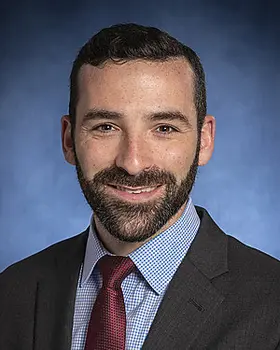
Daniel Lubelski is a fellowship-trained neurosurgeon with expertise in complex spine surgery and peripheral nerve surgery. He treats patients with spinal diseases and deformities, spine and nerve tumors, and brachial plexus injuries and other peripheral nerve injuries. Dr. Lubelski’s training in complex and robotic spine surgery, spinal oncology and peripheral nerve injuries allows him to comprehensively evaluate patients and develop custom treatment plans to address symptoms and improve patients’ quality of life. He prioritizes patient-centered care, effective communication and working in multidisciplinary collaboration to identify the best treatment. After obtaining his undergraduate degree at the City University of New York, Dr. Lubelski spent a year doing predoctoral research at the National Institutes of Health. He then obtained his medical degree from the Cleveland Clinic Lerner College of Medicine, and he performed stem cell tumor research as a Howard Hughes Medical Institute fellow. Dr. Lubelski went on to the Johns Hopkins University School of Medicine for a neurosurgery residency and an enfolded fellowship in peripheral nerve surgery. His postdoctoral training also included a fellowship in complex spine surgery and spinal oncology at Johns Hopkins, as well as a traveling fellowship with advanced training at the Memorial Sloan Kettering Cancer Center and MD Anderson Cancer Center. Dr. Lubelski is a prolific researcher who focuses on patient quality of life and on using big data to develop individualized prediction models to determine optimal treatments tailored to each person. He has authored more than 200 peer-reviewed papers and numerous textbook chapters, has lectured nationally and internationally, and serves as a reviewer for the top neurosurgical journals. Dr. Lubelski is rated as a Distinguished provider by MediFind in the treatment of Bone Tumor. His top areas of expertise are Spinal Tumor, Chordoma, Spinal Stenosis, Spinal Fusion, and Laminectomy.
Dennis Priebat is a Hematologist Oncology specialist and an Oncologist in Washington, Washington, D.c.. Dr. Priebat is rated as a Distinguished provider by MediFind in the treatment of Bone Tumor. His top areas of expertise are Adult Soft Tissue Sarcoma, Undifferentiated Pleomorphic Sarcoma, Mesenchymoma, and Rhabdomyosarcoma Embryonal.
Areas of Expertise
MediFind evaluates expertise by pulling from factors such as number of articles a doctor has published in medical journals, participation in clinical trials, speaking at industry conferences, prescribing and referral patterns, and strength of connections with other experts in their field.
Learn more about MediFind’s expert tiers
- Elite
- B-Cell LymphomaDr. Ambinder isElite. Learn about B-Cell Lymphoma.
- Hodgkin LymphomaDr. Ambinder isElite. Learn about Hodgkin Lymphoma.
- Non-Hodgkin LymphomaDr. Ambinder isElite. Learn about Non-Hodgkin Lymphoma.
- Distinguished
- Classical Hodgkin LymphomaDr. Ambinder isDistinguished. Learn about Classical Hodgkin Lymphoma.
- Diffuse Large B-Cell Lymphoma (DLBCL)Dr. Ambinder isDistinguished. Learn about Diffuse Large B-Cell Lymphoma (DLBCL).
- Follicular LymphomaDr. Ambinder isDistinguished. Learn about Follicular Lymphoma.
- Large-Cell Immunoblastic LymphomaDr. Ambinder isDistinguished. Learn about Large-Cell Immunoblastic Lymphoma.
- Midline Lethal GranulomaDr. Ambinder isDistinguished. Learn about Midline Lethal Granuloma.
- T-Cell LymphomaDr. Ambinder isDistinguished. Learn about T-Cell Lymphoma.
- Advanced
- Adult Soft Tissue SarcomaDr. Ambinder isAdvanced. Learn about Adult Soft Tissue Sarcoma.
- AgranulocytosisDr. Ambinder isAdvanced. Learn about Agranulocytosis.
- Burkitt LymphomaDr. Ambinder isAdvanced. Learn about Burkitt Lymphoma.
- Chronic B-Cell Leukemia (CBCL)Dr. Ambinder isAdvanced. Learn about Chronic B-Cell Leukemia (CBCL).
- Chronic Lymphocytic Leukemia (CLL)Dr. Ambinder isAdvanced. Learn about Chronic Lymphocytic Leukemia (CLL).
- Cutaneous T-Cell Lymphoma (CTCL)Dr. Ambinder isAdvanced. Learn about Cutaneous T-Cell Lymphoma (CTCL).
- Experienced
- Acute Lymphoblastic Leukemia (ALL)Dr. Ambinder isExperienced. Learn about Acute Lymphoblastic Leukemia (ALL).
- Acute Myeloblastic Leukemia with MaturationDr. Ambinder isExperienced. Learn about Acute Myeloblastic Leukemia with Maturation.
- Acute Myeloblastic Leukemia without Maturation
- Acute Myeloid Leukemia (AML)Dr. Ambinder isExperienced. Learn about Acute Myeloid Leukemia (AML).
- Anal CancerDr. Ambinder isExperienced. Learn about Anal Cancer.
- Anaplastic Large Cell LymphomaDr. Ambinder isExperienced. Learn about Anaplastic Large Cell Lymphoma.