
Overview
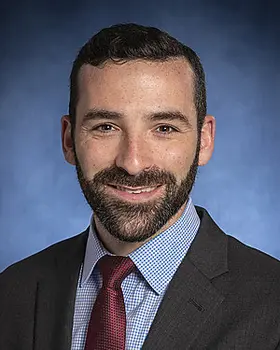
Chetan Bettegowda is the director of the Johns Hopkins Department of Neurosurgery. He offers comprehensive treatments for adult patients with benign and malignant brain tumors, specializing in the treatment of patients with primary brain tumors such as gliomas, meningiomas and pituitary tumors. He performs both open surgery and stereotactic radiosurgery for patients with metastatic tumors to the brain, and also provides stereotactic radiosurgery for other neurological disorders, including spinal tumors, trigeminal neuralgia and skull-base tumors.
Dr. Bettegowda is rated as an Advanced provider by MediFind in the treatment of Chondrosarcoma. His top areas of expertise are Trigeminal Neuralgia, Astrocytoma, Glioblastoma, Rhizotomy, and Microvascular Decompression.
His clinical research consists of co-authoring 398 peer reviewed articles and participating in 5 clinical trials. MediFind looks at clinical research from the past 15 years. In particular, he has co-authored 3 articles in the study of Chondrosarcoma.
Insurance
Accepted insurance can change. Please verify directly with the provider.
Accepted insurance plans:
- EPO
- HMO
- POS
- PPO
- EPO
- HMO
- POS
- PPO
- HMO
- POS
- PPO
- EPO
- HMO
- PPO
- INSURANCE PLAN
- MEDICARE PDP
- PPO
- HMO
- POS
- PPO
- HMO
- INDEMNITY
- POS
- PPO
Locations
10753 Falls Road, Pavilion II, Suite 115, Pavilion II, Suite 115, Lutherville, MD 21093
401 North Broadway Street, Weinberg Building, Floor-L2, Baltimore, MD 21287
601 North Caroline Street, Floor 5, Baltimore, MD 21287
Clinical Research
Clinical research consists of overseeing clinical studies of patients undergoing new treatments and therapies, and publishing articles in peer reviewed medical journals. Providers who actively participate in clinical research are generally at the forefront of the fields and aware of the most up-to-date advances in treatments for their patients.
5 Clinical Trials
Johns Hopkins Outpatient Center
Daniel Lubelski is a fellowship-trained neurosurgeon with expertise in complex spine surgery and peripheral nerve surgery. He treats patients with spinal diseases and deformities, spine and nerve tumors, and brachial plexus injuries and other peripheral nerve injuries. Dr. Lubelski’s training in complex and robotic spine surgery, spinal oncology and peripheral nerve injuries allows him to comprehensively evaluate patients and develop custom treatment plans to address symptoms and improve patients’ quality of life. He prioritizes patient-centered care, effective communication and working in multidisciplinary collaboration to identify the best treatment. After obtaining his undergraduate degree at the City University of New York, Dr. Lubelski spent a year doing predoctoral research at the National Institutes of Health. He then obtained his medical degree from the Cleveland Clinic Lerner College of Medicine, and he performed stem cell tumor research as a Howard Hughes Medical Institute fellow. Dr. Lubelski went on to the Johns Hopkins University School of Medicine for a neurosurgery residency and an enfolded fellowship in peripheral nerve surgery. His postdoctoral training also included a fellowship in complex spine surgery and spinal oncology at Johns Hopkins, as well as a traveling fellowship with advanced training at the Memorial Sloan Kettering Cancer Center and MD Anderson Cancer Center. Dr. Lubelski is a prolific researcher who focuses on patient quality of life and on using big data to develop individualized prediction models to determine optimal treatments tailored to each person. He has authored more than 200 peer-reviewed papers and numerous textbook chapters, has lectured nationally and internationally, and serves as a reviewer for the top neurosurgical journals. Dr. Lubelski is rated as a Distinguished provider by MediFind in the treatment of Chondrosarcoma. His top areas of expertise are Spinal Tumor, Chordoma, Spinal Stenosis, Spinal Fusion, and Laminectomy.
Johns Hopkins University
Nicholas Theodore is a Neurosurgery provider in Baltimore, Maryland. Dr. Theodore is rated as a Distinguished provider by MediFind in the treatment of Chondrosarcoma. His top areas of expertise are Tethered Cord Syndrome, Spinal Tumor, Spinal Stenosis, Laminectomy, and Spinal Fusion. Dr. Theodore is currently accepting new patients.

Johns Hopkins Outpatient Center
Dr. Gary Gallia's specialty is endoscopic endonasal surgical approaches to skull base pathologies with a focus on neurosurgical oncology. He utilizes the latest techniques in preoperative imaging, computer-guided surgical navigation, intraoperative monitoring, and minimally invasive and Neuroendoscopy approaches in the management of patients with benign and malignant brain tumors, metastatic tumors to the brain, skull base neoplasms, and pituitary tumors. He is the director of the Neurosurgery Skull Base Center and surgical director of the Johns Hopkins Pituitary Center. Dr. Gary Gallia graduated summa cum laude from the Gibbons Scholar MD/PhD program at Jefferson Medical College and Thomas Jefferson University. He completed his general surgery internship at The Johns Hopkins Hospital where he was awarded surgical intern of the year. He then completed his neurological surgery residency and a postdoctoral fellowship in neuro-oncology at The Johns Hopkins Hospital. Following residency, he completed a minimally invasive and endoscopic neurosurgery fellowship with Dr. Charles Teo at the Prince of Wales Private Hospital and Sydney Children's Hospital in Sydney, Australia. Dr. Gallia is rated as an Elite provider by MediFind in the treatment of Chondrosarcoma. His top areas of expertise are Olfactory Neuroblastoma, Chordoma, Pituitary Tumor, Endoscopic Transnasal Transsphenoidal Surgery, and Awake Craniotomy.
Areas of Expertise
MediFind evaluates expertise by pulling from factors such as number of articles a doctor has published in medical journals, participation in clinical trials, speaking at industry conferences, prescribing and referral patterns, and strength of connections with other experts in their field.
Learn more about MediFind’s expert tiers
- Elite
- AstrocytomaDr. Bettegowda isElite. Learn about Astrocytoma.
- Brain TumorDr. Bettegowda isElite. Learn about Brain Tumor.
- EpendymomaDr. Bettegowda isElite. Learn about Ependymoma.
- GlioblastomaDr. Bettegowda isElite. Learn about Glioblastoma.
- GliomaDr. Bettegowda isElite. Learn about Glioma.
- OligodendrogliomaDr. Bettegowda isElite. Learn about Oligodendroglioma.
- Distinguished
- Atypical Teratoid Rhabdoid Tumor (ATRT)Dr. Bettegowda isDistinguished. Learn about Atypical Teratoid Rhabdoid Tumor (ATRT).
- Bone TumorDr. Bettegowda isDistinguished. Learn about Bone Tumor.
- Brain Stem CancerDr. Bettegowda isDistinguished. Learn about Brain Stem Cancer.
- ChordomaDr. Bettegowda isDistinguished. Learn about Chordoma.
- Dysembryoplastic Neuroepithelial Tumors (DNET)Dr. Bettegowda isDistinguished. Learn about Dysembryoplastic Neuroepithelial Tumors (DNET).
- Embryonal Tumor with Multilayered RosettesDr. Bettegowda isDistinguished. Learn about Embryonal Tumor with Multilayered Rosettes.
- Advanced
- Acoustic NeuromaDr. Bettegowda isAdvanced. Learn about Acoustic Neuroma.
- Arachnoid CystsDr. Bettegowda isAdvanced. Learn about Arachnoid Cysts.
- Awake CraniotomyDr. Bettegowda isAdvanced. Learn about Awake Craniotomy.
- Cerebrospinal Fluid LeakDr. Bettegowda isAdvanced. Learn about Cerebrospinal Fluid Leak.
- ChondrosarcomaDr. Bettegowda isAdvanced. Learn about Chondrosarcoma.
- CraniectomyDr. Bettegowda isAdvanced. Learn about Craniectomy.
- Experienced
- Absence SeizureDr. Bettegowda isExperienced. Learn about Absence Seizure.
- Brain AbscessDr. Bettegowda isExperienced. Learn about Brain Abscess.
- Brain AneurysmDr. Bettegowda isExperienced. Learn about Brain Aneurysm.
- Cerebellum Agenesis HydrocephalyDr. Bettegowda isExperienced. Learn about Cerebellum Agenesis Hydrocephaly.
- Choroid Plexus CystDr. Bettegowda isExperienced. Learn about Choroid Plexus Cyst.
- Chronic Subdural HematomaDr. Bettegowda isExperienced. Learn about Chronic Subdural Hematoma.