Overview
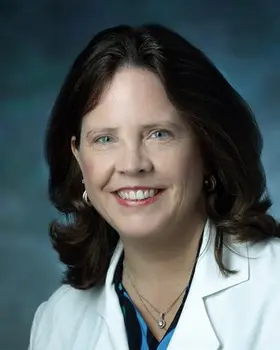
Shannon Dean is a Neurologist and a Pediatric Neurologist practicing medicine in Baltimore, Maryland.
Dr. Dean is highly rated in 8 conditions, according to our data. Her clinical expertise encompasses Stereotypic Movement Disorder, Tourette Syndrome, Transient Tic Disorder, and Conversion Disorder.
Dr. Dean is board certified in American Board Of Psychiatry And Neurology. She is actively involved in clinical research, co-authoring 10 peer reviewed articles and participating in 1 clinical trial. Dr. Dean is currently accepting new patients.
Specialties
Licenses
Board Certifications
Fellowships
Languages Spoken
Gender
Insurance
Accepted insurance can change. Please verify directly with the provider.
Accepted insurance plans:
- EPO
- HMO
- POS
- PPO
- EPO
- HMO
- POS
- PPO
- EPO
- HMO
- POS
- PPO
- HMO
- POS
- PPO
- EPO
- HMO
- PPO
- INSURANCE PLAN
- MEDICARE PDP
- PPO
- HMO
- POS
- PPO
- HMO
- INSURANCE PLAN
- MANAGED MEDICAID PLAN
- MEDICARE MAPD
- MEDICARE PDP
- MEDICARE SNP
- OTHER COMMERCIAL
- OTHER MEDICARE
- OTHER MEDICARE PART D
- PPO
- EPO
- POS
- PPO
- HMO
- MANAGED MEDICAID PLAN
- MEDICARE MAPD
- MEDICARE-MEDICAID PLAN
- OTHER MANAGED MEDICAID
- OTHER MEDICAID
- STATE MEDICAID
- EPO
- HMO
- POS
- PPO
- EPO
- HMO
- INSURANCE PLAN
- MANAGED MEDICAID PLAN
- MEDICARE MAPD
- MEDICARE PDP
- MEDICARE SNP
- MEDICARE-MEDICAID PLAN
- OTHER MEDICARE
- OTHER MEDICARE PART D
Locations
Clinical Research
Clinical research consists of overseeing clinical studies of patients undergoing new treatments and therapies, and publishing articles in peer reviewed medical journals. Providers who actively participate in clinical research are generally at the forefront of the fields and aware of the most up-to-date advances in treatments for their patients.
1 Clinical Trials

Johns Hopkins Outpatient Center
Brenda Banwell is the director of the Department of Pediatrics, as well as pediatrician-in-chief and co-director of Johns Hopkins Children’s Center, where she helps manage the hospital’s many clinical and research centers. Dr. Banwell is a renowned expert in the research and treatment of pediatric multiple sclerosis (MS) and other neuroimmune disorders. She specializes in and studies the use of neuroimaging to assess the clinical and cognitive impact of the conditions, as well as the function of the immune system in children with these disorders. She also created a standardized clinical care algorithm and clinical database in order to evaluate the clinical impact of MS. Dr. Banwell has published more than 250 manuscripts in high-impact journals, along with over 25 book chapters. In addition, she has over 200 national and international invited lectureships and visiting professorships. An advocate for pediatric multiple sclerosis needs and research, Dr. Banwell serves as chair of the International Medical and Scientific Board of the Multiple Sclerosis International Federation, and the Myelin Oligodendrocyte Glycoprotein Antibody–Associated Disease (MOGAD) International Research Consortium. She is also chair of the pediatric committee of the National Institutes of Health NeuroNEXT program, which conducts studies on treatments for neurological diseases through academic, private, and industry collaborations. Dr. Banwell currently serves as past-chair of the International Pediatric Multiple Sclerosis Study Group, Dr. Banwell earned her medical degree from the University of Western Ontario. She later completed a residency in pediatrics at the University of Western Ontario-Children's Hospital of Western Ontario and a second residency in pediatric neurology at University of Toronto – The Hospital for Sick Children. Her residencies were followed by a fellowship in neuromuscular research at Mayo Clinic. Dr. Banwell is highly rated in 16 conditions, according to our data. Her clinical expertise encompasses Multiple Sclerosis (MS), CACH Syndrome, Optic Neuritis, and Transverse Myelitis. Dr. Banwell is board certified in Royal College Of Physicians And Surgeons Of Canada. Dr. Banwell is currently accepting new patients.
The Kennedy Krieger Institute
Dr. Comi graduated from SUNY Buffalo School of Medicine and received her training in pediatrics at the Children's Hospital of Buffalo and her child neurology training at Johns Hopkins Medicine. Her clinical specialization is in the treatment of the neurological aspects of Sturge-Weber syndrome and other disorders related to capillary malformation. Dr. Comi's clinical research interests focus on improving the early diagnosis and treatment of brain involvement in Sturge-Weber syndrome in order to prevent ischemic brain injury in affected infants and young children, and on studies to understand what causes Sturge-Weber syndrome. Her laboratory research work deals with the pathogenesis of Sturge-Weber syndrome, recently shown to be caused by a somatic mutation, and on developing new drug targets, screening assays, models and therapeutic strategies for Sturge-Weber syndrome. Her lab group also works on developing better neuroprotective and neuroregenerative responses to brain injury resulting from impaired blood flow to the brain. Dr. Comi is highly rated in 13 conditions, according to our data. Her clinical expertise encompasses Sturge-Weber Syndrome, Parkes Weber Syndrome, Epilepsy in Children, Seizures, and Endovascular Embolization. Dr. Comi is board certified in American Board Of Psychiatry And Neurology. Dr. Comi is currently accepting new patients.

Telehealth Video Visit
William D. Gaillard, MD, professor of neurology and neurophysiology, is chief of the Divisions of Child Neurology and of Epilepsy and Neurophysiology. He is director of the Comprehensive Pediatric Epilepsy Program — one of the leading multidisciplinary pediatric epilepsy programs in the country. As associate director of the Children’s National Research Institute’s Center for Neuroscience Research, he is responsible for overseeing and organizing clinical neuroscience research. Dr. Gaillard is professor of pediatrics and neurology at the George Washington University School of Medicine; Professor of Neurology, Georgetown University; and Adjunct Professor of Hearing and Speech Sciences, University of Maryland, College Park. Additionally, Dr. Gaillard holds longstanding collaborations with the Clinical Epilepsy Section (CES), National Institute of Neurological Disorders and Stroke and NIH. His innovative research utilizes advanced structural and functional imaging to examine the effects of epilepsy on brain structure and function. His pioneering work with functional imaging has changed clinical practice for patients with epilepsy, made important technical contributions to structural and functional imaging methods, and provided fundamental scientific insights on the biology of brain plasticity. Ultimately, the goal of his research is to improve the outcomes and lives of children with epilepsy. Dr. Gaillard is a past president of the American Epilepsy Society. He is past treasurer of the American Epilepsy Society, past chair of the International League Against Epilepsy (ILAE) Commission on Diagnostics, past chair of the ILAE Pediatric Epilepsy Surgery Task Force and past member of the Pediatric Commission. He is a past editor of Epilepsy Research and a past editor of Epilepsia. He is the author of more than 240 peer-reviewed scientific papers and more than 50 chapters and holds longstanding federal and foundation grant funding. Dr. Gaillard is highly rated in 21 conditions, according to our data. His clinical expertise encompasses Epilepsy, Seizures, Epilepsy in Children, Liver Embolization, and Deep Brain Stimulation. Dr. Gaillard is board certified in Pediatrics: American Board Of Pediatrics, 2005, American Board Of Psychiatry And Neurology, and American Board Of Psychiatry And Neurology, 1992. Dr. Gaillard is currently accepting new patients.
Frequently Asked Questions about Dr. Shannon L. Dean
How do I make an appointment with Dr. Shannon L. Dean?
You can book an appointment with Dr. Shannon L. Dean by calling their office at 443-923-3286. MediFind provides direct contact information so you can schedule visits, second opinions, or consultations without navigating third-party calendars.
Is Dr. Shannon L. Dean a top-rated expert for Stereotypic Movement Disorder?
MediFind is an objective health platform that identifies experts based on real-world data. Dr. Shannon L. Dean is classified as an Distinguished expert for Stereotypic Movement Disorder, meaning they are among the top experts in the country for this condition. This ranking is based on their volume of patients, published research, and peer connections.
What conditions does Dr. Shannon L. Dean specialize in?
While Dr. Shannon L. Dean is a Neurology, they have specific expertise in Stereotypic Movement Disorder, Tourette Syndrome, and Transient Tic Disorder. MediFind analyzes a doctor's articles and referral patterns to identify their specific areas of focus within Neurology.
Does Dr. Shannon L. Dean participate in research or clinical trials?
Yes. Dr. Shannon L. Dean has published 10 articles and abstracts on conditions like Stereotypic Movement Disorder. You can view a list of Dr. Shannon L. Dean's latest peer-reviewed publications and clinical trial participation on their profile to see if they are active in new treatments.
Does Dr. Shannon L. Dean accept my insurance?
Dr. Shannon L. Dean accepts most major insurance plans, including Aetna and Anthem BCBS. We recommend calling the office directly at 443-923-3286 to verify that your specific plan is currently accepted before your visit.
Areas of Expertise
MediFind evaluates expertise by pulling from factors such as number of articles a doctor has published in medical journals, participation in clinical trials, speaking at industry conferences, prescribing and referral patterns, and strength of connections with other experts in their field.
Learn more about MediFind’s expert tiers
- Distinguished
- Stereotypic Movement DisorderDr. Dean isDistinguished. Learn about Stereotypic Movement Disorder.
- Tourette SyndromeDr. Dean isDistinguished. Learn about Tourette Syndrome.
- Advanced
- CamptocormismDr. Dean isAdvanced. Learn about Camptocormism.
- ChoreaDr. Dean isAdvanced. Learn about Chorea.
- Conversion DisorderDr. Dean isAdvanced. Learn about Conversion Disorder.
- Serotonin SyndromeDr. Dean isAdvanced. Learn about Serotonin Syndrome.
- Spasmus NutansDr. Dean isAdvanced. Learn about Spasmus Nutans.
- Transient Tic DisorderDr. Dean isAdvanced. Learn about Transient Tic Disorder.
- Experienced
- 3MC SyndromeDr. Dean isExperienced. Learn about 3MC Syndrome.
- AphantasiaDr. Dean isExperienced. Learn about Aphantasia.
- Autism Spectrum DisorderDr. Dean isExperienced. Learn about Autism Spectrum Disorder.
- Benign Rolandic EpilepsyDr. Dean isExperienced. Learn about Benign Rolandic Epilepsy.
- Borjeson-Forssman-Lehmann SyndromeDr. Dean isExperienced. Learn about Borjeson-Forssman-Lehmann Syndrome.
- Coffin-Lowry SyndromeDr. Dean isExperienced. Learn about Coffin-Lowry Syndrome.
- Cramp-Fasciculation SyndromeDr. Dean isExperienced. Learn about Cramp-Fasciculation Syndrome.
- Developmental Reading DisorderDr. Dean isExperienced. Learn about Developmental Reading Disorder.
- Drug Induced DyskinesiaDr. Dean isExperienced. Learn about Drug Induced Dyskinesia.
- DysgraphiaDr. Dean isExperienced. Learn about Dysgraphia.
- EncephalitisDr. Dean isExperienced. Learn about Encephalitis.
- Focal DystoniaDr. Dean isExperienced. Learn about Focal Dystonia.
- GalactosialidosisDr. Dean isExperienced. Learn about Galactosialidosis.
- GAPO SyndromeDr. Dean isExperienced. Learn about GAPO Syndrome.
- Hereditary AtaxiaDr. Dean isExperienced. Learn about Hereditary Ataxia.
- Jumping Frenchmen of MaineDr. Dean isExperienced. Learn about Jumping Frenchmen of Maine.
- Kabuki SyndromeDr. Dean isExperienced. Learn about Kabuki Syndrome.
- Lennox-Gastaut Syndrome (LGS)Dr. Dean isExperienced. Learn about Lennox-Gastaut Syndrome (LGS).
- Memory LossDr. Dean isExperienced. Learn about Memory Loss.
- MigraineDr. Dean isExperienced. Learn about Migraine.
- Movement DisordersDr. Dean isExperienced. Learn about Movement Disorders.
- Myoclonus-DystoniaDr. Dean isExperienced. Learn about Myoclonus-Dystonia.
- Neurotoxicity SyndromesDr. Dean isExperienced. Learn about Neurotoxicity Syndromes.
- Odontotrichomelic SyndromeDr. Dean isExperienced. Learn about Odontotrichomelic Syndrome.
- Oppenheim DystoniaDr. Dean isExperienced. Learn about Oppenheim Dystonia.
- Opsoclonus-Myoclonus SyndromeDr. Dean isExperienced. Learn about Opsoclonus-Myoclonus Syndrome.
- PineocytomaDr. Dean isExperienced. Learn about Pineocytoma.
- Post-Traumatic EpilepsyDr. Dean isExperienced. Learn about Post-Traumatic Epilepsy.
- Primary Orthostatic TremorDr. Dean isExperienced. Learn about Primary Orthostatic Tremor.
- SeizuresDr. Dean isExperienced. Learn about Seizures.
- Stickler SyndromeDr. Dean isExperienced. Learn about Stickler Syndrome.
- X-Linked Dystonia-ParkinsonismDr. Dean isExperienced. Learn about X-Linked Dystonia-Parkinsonism.